
TINA FLETCHER ARTIST
Print & Frame Guide
Your art has arrived. Now what? Everything you need to know to display it with confidence and keep it looking stunning for years to come.
Part 1: The Moment It Arrives
When your tube or box arrives, take a breath. It has been carefully packed, but you want to handle it with care.
For Prints
Lay the tube on a flat, clean surface. Cut the tape at the ends and gently slide the rolled print out. Do not unroll it immediately — let it sit for a few hours in a room-temperature space. This allows the paper to slowly relax and prevents cracking. When you are ready, gently unroll it onto a clean, flat surface, using a soft, heavy book or a piece of mat board to hold down the corners.
For Originals
Your original has been carefully wrapped in acid-free glassine paper. Gently unwrap it, revealing the painting. Lay it flat, and take a moment to admire the texture of the paint and the layered dark ground.
Part 2: The Framing Guide
The golden rule: never let the paper touch the glass. If the surface of your print or original presses directly against the glass, moisture can get trapped — over time this causes the paper to ripple, stick to the glass, or even grow mould. The solution: use a mat board or a float frame.

Option A: The Mat Board
The classic choice. A thick, white or cream border sits between your artwork and the glass, drawing the eye inward and making the piece feel larger and more deliberate. For an A3 print, aim for a 3–5cm mat border; for an A2, 5–8cm works beautifully.
Option B: The Float Frame
The modern choice. A deep frame where the artwork sits raised above the backing board, with a visible gap between the edge of the paper and the inside edge of the frame — the piece feels like a three-dimensional object rather than a poster.
Choosing your frame colour
- Black frame (the seamless choice): best for a moody, dramatic look — it disappears into the dark void of the painting, making the white subject appear to float.
- Natural wood frame (the warm choice): adds warmth and an organic, modern feel — works beautifully with wooden floors or earthy tones.
- White frame (the crisp choice): pops against a light wall — fresh, clean, and contemporary.
UV-protective glass — a worthy investment. Sunlight is the enemy of all art. If you’re hanging your piece in a very bright room, ask your framer for UV-protective glass — it will keep your painting looking fresh for decades.
Part 3: The Hanging Guide
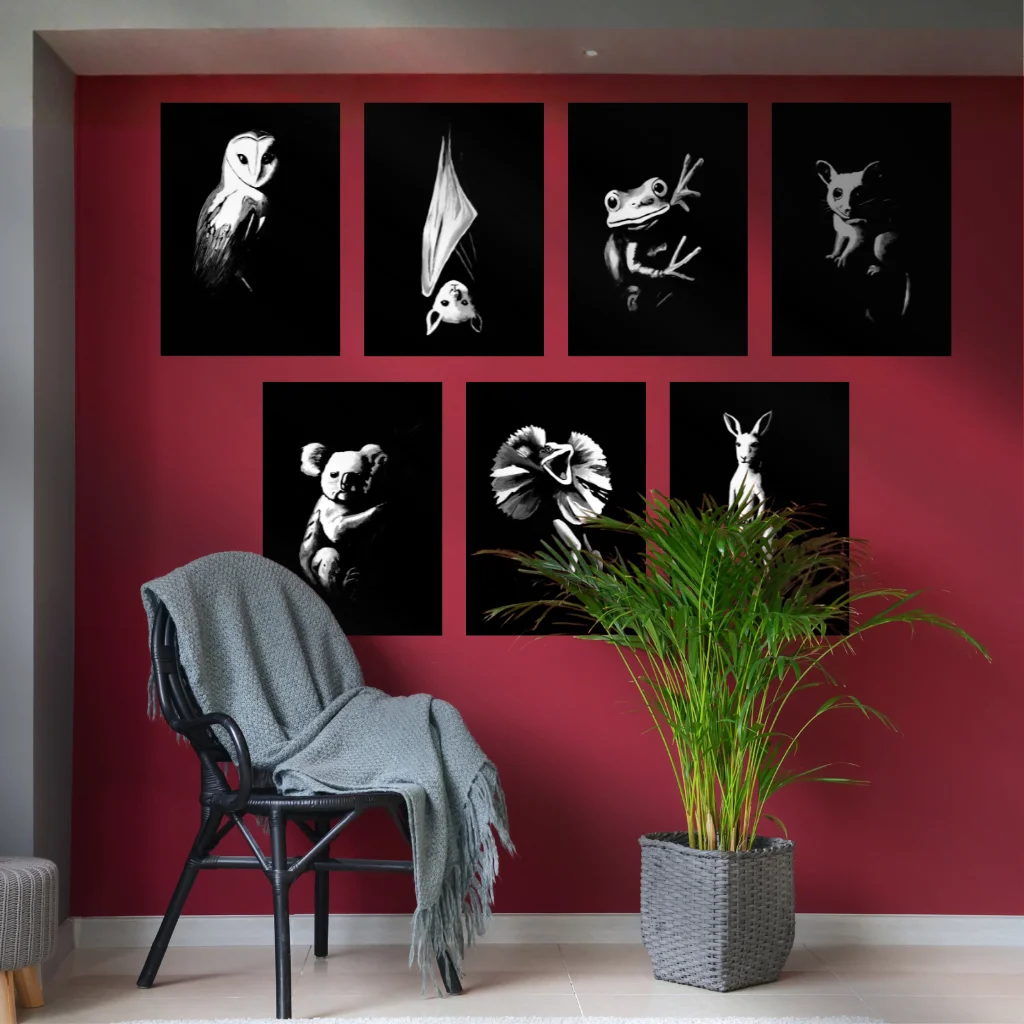
High-contrast art relies on light — it needs to catch the sun to really sing. Here’s a simple cheat sheet for placement:

- Above the bed: keep it centred, with 15–20cm between the top of the headboard and the bottom of the frame.
- In a hallway: a long, narrow wall is the perfect home for a single, dramatic piece — the dark void pulls the eye down the hall.
- In a living room: let it breathe — at least 60–90cm of empty space on either side, without crowding it with other art.
The “Two-Second” Rule: when someone walks into a room, their eyes scan the space in about two seconds. High-contrast art hits the sweet spot — it catches the eye immediately without overwhelming. Pro tip: walk around your house with a piece of paper cut to the same size as your painting and hold it against different walls. Wherever you stop and think “yes, that’s it” is the winner.
Part 4: The Care Guide
Dusting: use a soft, dry microfibre cloth to gently wipe the glass or surface. Never use water, sprays, or household cleaners — these can seep into the frame and damage the paper.
Storing (if not yet framed): store flat in a dry, cool room, inside the acid-free glassine paper it arrived in, with a piece of rigid cardboard on top to protect it from bumps.
Your Certificate of Authenticity (originals): store it in a safe place, ideally with your other important papers — it proves the piece is a genuine, one-of-a-kind work by Tina Fletcher.
Quick Reference Checklist
A quick checklist to keep your print or original looking its best for years to come.
Unpack carefully, let prints relax before unrolling.
Always use a mat board or float frame to keep paper off glass.
Choose a frame that matches the mood of your room (black, wood, or white).
Consider UV-protective glass for bright rooms.
Hang it 15–20cm above a headboard, or give it plenty of breathing room in a living space.
Dust gently with a dry microfibre cloth.
Store your Certificate of Authenticity safely.
Shopping for your next piece?
Still have questions?
If you have any questions about framing, hanging, or caring for your piece, don’t hesitate to reach out. I am always happy to help.