


A Bright Room, a Dark Painting, and No Special Rules.
Where to hang dark artwork, how to look after it, and why enjoying a painting shouldn’t feel complicated.
I’ve always liked the idea of a painting becoming part of someone’s everyday life.
Not something you have to tiptoe around. Not something that requires a special room or a little spotlight mounted above it. Just a painting you love, hanging somewhere you can enjoy it.
That doesn’t mean I think art is unimportant. Quite the opposite. I would happily fall in love with a painting worth five thousand dollars, ten thousand dollars or two million if I had that sort of money to spend.
I appreciate beautiful, serious, valuable art. I also appreciate people who collect it and take extraordinary care of it.
But the paintings I’m making now are intended to be accessible original art. And part of the pleasure of that, I think, is being able to bring something original home and live with it without feeling that you’ve taken on the responsibilities of a museum curator.
So if you’re wondering whether a dark painting will work in your bright living room, my answer is wonderfully uncomplicated: put it somewhere you enjoy looking at it.
A bright room isn’t the enemy
A painting with a lot of black in it doesn’t need a dark room. In fact, a bright space can be a lovely setting for it.

The contrast between a light wall and a dark painting can give the artwork a strong presence. You might notice a face, a figure or a little patch of white before you realise how much of the subject is still hiding in the black.
That is something I enjoy about painting this way. I don’t necessarily want every part of the subject explained. I like leaving areas for your eye and imagination to explore.
On a bright wall, those areas of darkness can feel especially interesting.
But you don’t need white walls either. A dark painting can look wonderful on a coloured wall, beside a patterned chair or in a room full of things you love.
There isn’t one correct room for it. There’s your room.
What the light actually does
My paintings start on a dark surface, currently mainly black gesso. The gesso has a fairly flat, matte finish, while the black acrylic I sometimes add during painting has a slightly different sheen.
That means the dark areas aren’t always identical when you’re standing in front of the original. As the light shifts, one patch of black may catch a little more of it than another.
The whites and greys change too. A subtle grey might be easy to see in daylight and less noticeable in the evening. A rough brushstroke may suddenly stand out when the light comes from the side.

I like those little changes. They’re part of what makes an original painting interesting to live with.
You don’t need to install a dedicated picture light to appreciate them. Ordinary daylight and the lighting you already use in your home can do the job.
If a particular spot creates an annoying reflection, try another wall or a slightly different position. If the painting disappears into a gloomy corner and you wish you could see more of it, move it somewhere brighter.
That’s not a complicated lighting plan. That’s just looking at your own room and deciding what works.
What about direct sunlight?
Here’s the practical bit.
Strong, prolonged direct sunlight can affect paintings over time. Colours and materials can change with exposure, and that includes monochrome work. Heat and changing conditions aren’t especially helpful either.
So if you have a choice between two equally lovely spots, one in constant harsh sun and one with gentler light, the gentler spot is a sensible choice for keeping the artwork looking its best.
But I don’t think you need to become anxious about every patch of sunshine that crosses the wall.
You know your home. You know which rooms you use and where you want to see your art. It’s reasonable to make a decision that balances caring for the painting with actually enjoying it.
I’d rather give you the information than make you feel there’s only one acceptable answer.
Framed, unframed, or however you like it
Framing is another area where people can get tangled up in rules.
A frame can change the whole personality of a painting. A simple black frame might make it feel crisp and contained. A timber frame might bring some warmth. And a canvas can look terrific without a frame at all.
It depends on the painting, the room and what you enjoy.
I work on different surfaces, including canvas and paper, so the practical details aren’t always identical. A work on paper generally benefits from suitable framing and protection, while a canvas may be ready to hang as it is, depending on how it’s prepared.
You don’t need to turn that into a grand decorating project. Choose a presentation that looks good to you and suits the actual artwork.
And if your taste changes later, you can change the frame or move the painting. That’s one of the nice things about living with art rather than treating a room as a photograph that must never change.
A little care goes a long way
I want people to look after their paintings. I just don’t think looking after something has to become a complicated ritual.
For a finished acrylic painting on canvas, ordinary care can be quite straightforward. Keep dust from building up, and gently remove loose dust with a clean, soft, dry cloth or brush when needed.
If you’re thinking of wiping a painted surface with a damp cloth, check the care advice for that particular work first. Different finishes and surfaces can react differently, and scrubbing or household cleaning products aren’t a good idea.
For a painting on paper, leave the surface protected in its frame and clean the outside of the glazing rather than touching the artwork itself.
Try to avoid places where a painting is regularly splashed, knocked, or exposed to lots of moisture. That’s less about treating it like a priceless relic and more about ordinary common sense.
And if you’re unsure how to clean a particular piece, ask. I’d much rather answer a simple question than have someone take a chance with a product that doesn’t belong on a painting.
Good care is a way of enjoying something for longer. It doesn’t have to get in the way of enjoying it now.
You don’t have to make your home into a gallery
I love seeing artwork beautifully displayed. I can admire an elegant gallery wall, specialist lighting and carefully chosen frames as much as anyone.
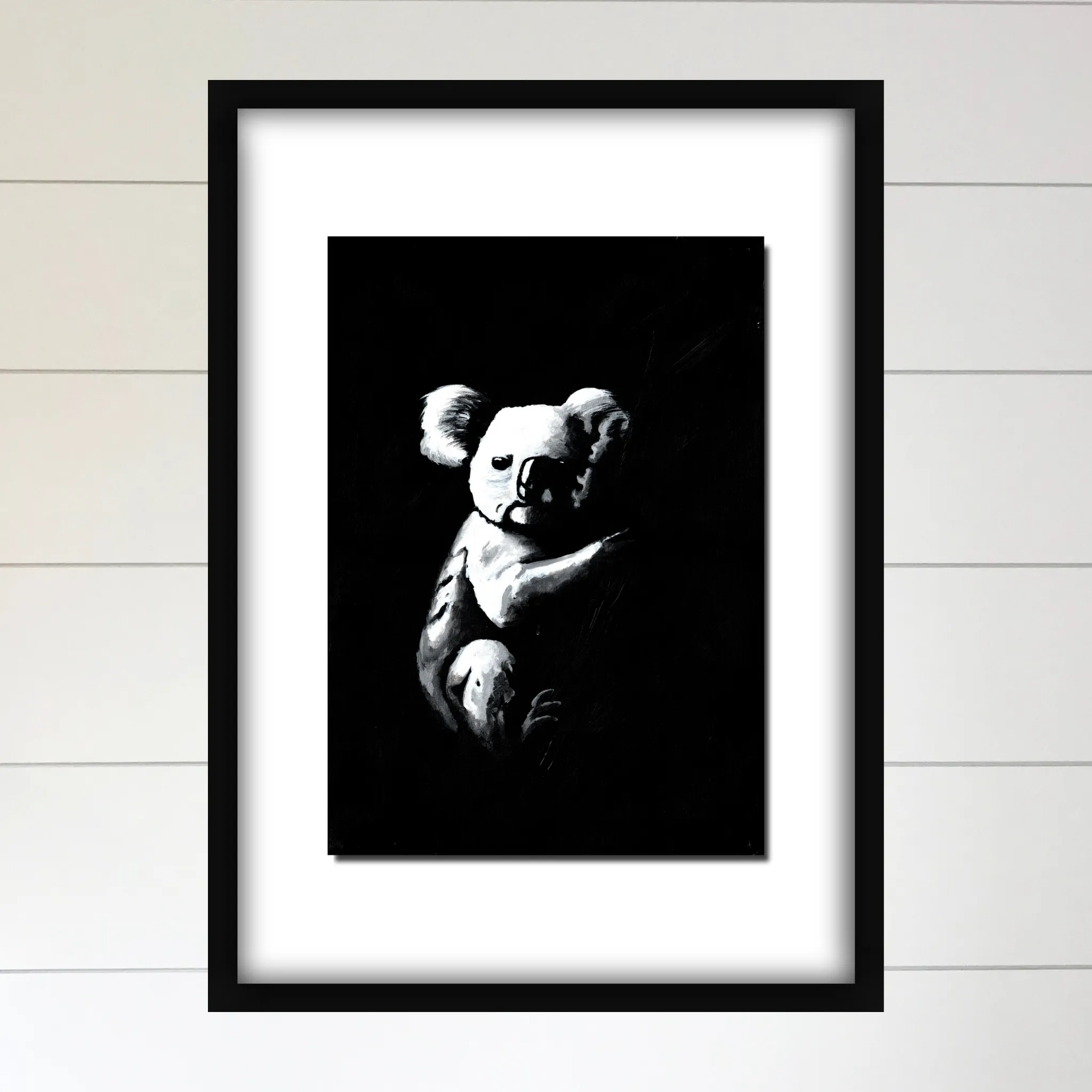
But I also love the idea of a painting living above a battered old sideboard, beside a favourite chair, in a hallway you walk through ten times a day, or in a room where the furniture doesn’t match.
Those are real places. They have people in them.
A painting can become familiar without becoming boring. You might notice something different in it one morning. You might walk past it for a week and then suddenly see a shape in the shadows that you hadn’t noticed before.
That’s the sort of relationship with art that appeals to me.
It doesn’t depend on how expensive the painting was. And it doesn’t require the room to be perfectly styled.
I think original art can be special and everyday at the same time.
Hang it where you’ll see it
If you’re trying to decide where a dark painting belongs, here’s the question I’d start with: where would you actually enjoy seeing it?
Maybe that’s the living room, where you spend most evenings. Maybe it’s your bedroom, where you want something quiet and a little mysterious. Maybe it’s beside your desk, where an odd character emerging from the black would make you smile during the day.
Then look at the practical things. Is the artwork easy to see? Is there an uncomfortable reflection? Is it somewhere likely to get bumped or splashed? Is it sitting in strong sun for hours every day?
Make whatever adjustments feel sensible to you.
That’s it. You don’t need a special lighting system or a list of decorating commandments.
And please don’t read that as saying a painting doesn’t deserve care because it’s affordable. Affordable original art is still original art. Someone made it, made decisions about every mark, and put a little bit of their imagination into it.
It deserves to be treated well.
It also deserves to be seen.
Art you can live with
I make paintings because I enjoy making them, and because I like the idea that someone else might see something in them that makes them want to take one home.
Perhaps they’ll choose a dark, strange little character. Perhaps an animal, a flower, or something they can’t quite explain. I don’t know what room it will end up in, and I rather like that.
It might hang in a colourful home, a quiet home, a tiny flat or a busy family house. It might be framed carefully or hung simply. The light might change around it through the day.
What I hope is that the person who chose it enjoys having it there.
Take reasonable care of it. Dust it gently when it needs it. Avoid the obvious things that could damage it. But don’t feel you have to build your life around protecting it.
A good painting can be something you treasure without being something you’re afraid to touch, hang or live near.
So find the wall you like.
Let the painting become part of the room.
And enjoy it.