Why I Leave So Much of My Paintings in the Dark
Negative space, a white pencil, and knowing when enough is enough.
If you’ve looked at a few of my paintings, you’ve probably noticed something. There’s an awful lot of black.
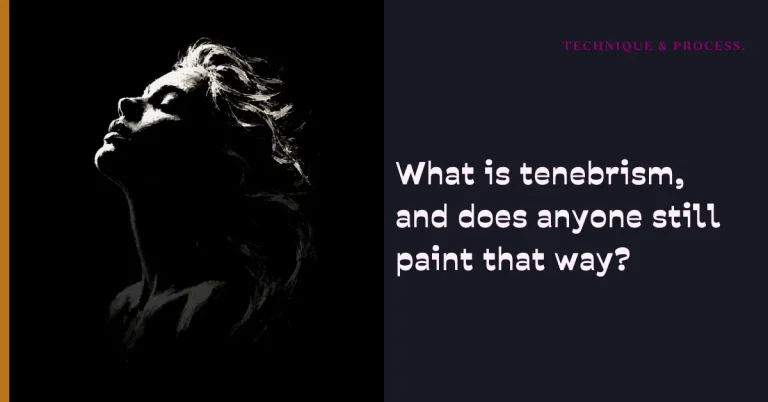
Sometimes half the painting is black. Sometimes considerably more. A face might appear out of nowhere, an animal might have only one side illuminated, or a figure might be disappearing into the darkness before you’ve even worked out where the rest of it went.
And yes, that’s deliberate.
I like giving people just enough information to recognise what they’re looking at, then leaving their imagination to do some of the work.
In art, the areas around and between things are called negative space. It’s one of those terms that sounds terribly technical for something we all understand instinctively.
It’s the silence between musical notes. The pause before somebody answers a question. The bit of a story nobody actually tells you.
In my paintings, it’s usually black.
And it’s every bit as important as the parts I’ve painted.
The black isn’t waiting to be filled
I always begin by painting my surface dark, and at the moment that’s mainly black.
I start with black gesso, which gives me a lovely flat, matte surface. Then, as the painting develops, I bring in black acrylic paint, but I don’t cover everything. I let the painting decide where it needs to go.
This creates something I particularly love about the originals. The matte black gesso and the slightly shiny black acrylic sit together, catching the light differently. Even where a painting appears completely black in a photograph, there’s often a subtle play between those two surfaces.
So the darkness isn’t just an empty background. It has its own character before I’ve even started telling the story with white and grey.
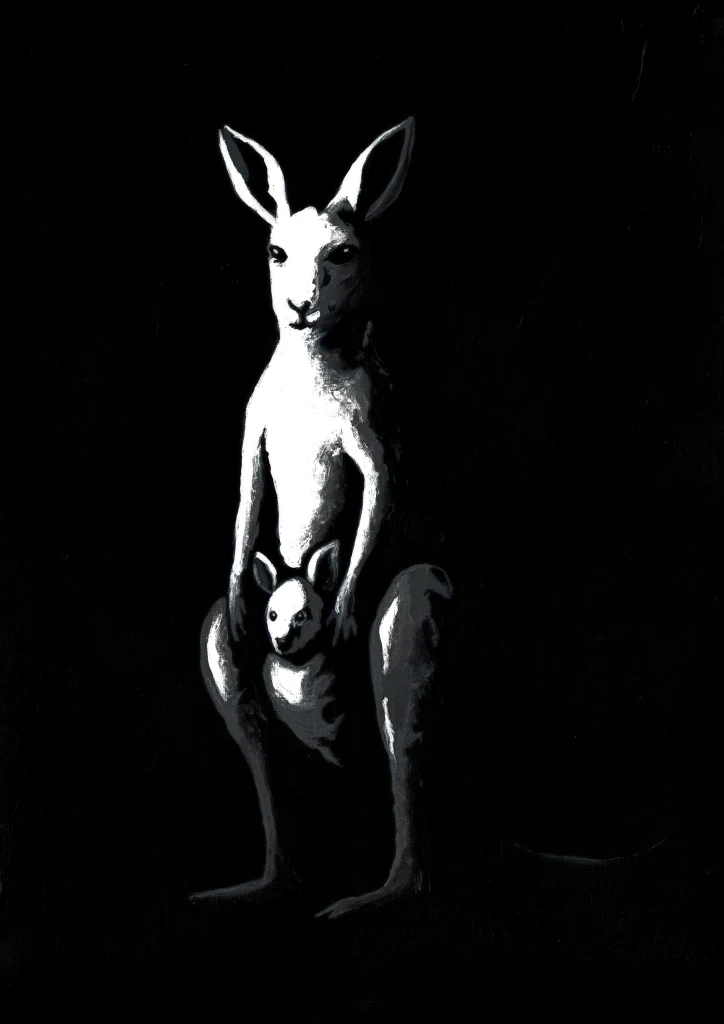
From there, I can concentrate on the parts of the subject I want you to see. Perhaps it’s an eye, the curve of a shoulder, or a few rough brushstrokes suggesting movement.
The rest can stay in the dark.
I love that moment when a handful of marks suddenly become something recognisable. You can be looking at what seems like unrelated shapes, and then one more brushstroke makes everything fall into place.
Of course, the opposite happens too. You add one more mark and somehow make the whole thing worse.
Which brings me to the problem of knowing when to stop.
When a painting feels wrong
Sometimes I’ll stand back from a painting and know something isn’t working.
I might not immediately know what it is.
The subject is there. The individual parts might look perfectly fine. But the whole thing feels out of whack.
This is when my white pencil comes out.
I’ll lightly pencil in possibilities over the painting, trying to work out where the imbalance is coming from.
Sometimes I’m reminding myself where the light source is supposed to be. Sometimes I’m sketching in the fuller shape of something to see whether I’ve lost an important part of it.
Other times I’m exploring what might happen if I added a little here or took something away over there.
The pencil isn’t a set of instructions I have to follow. It’s a way of seeing what I’m missing.
Once I work out what’s bothering me, I might add more paint. I might cover something back up with black. Or I might discover that the painting doesn’t need nearly as much as I thought.
And sometimes I simply put it aside, start another painting, and come back later with fresh eyes.
It’s surprising how obvious a problem can become when you’ve stopped staring at it.
Technically wrong can still look right
I’m not particularly interested in making every painting realistic.
I enjoy abstraction, expressive brushstrokes, strange shapes, and allowing things to develop as I go.
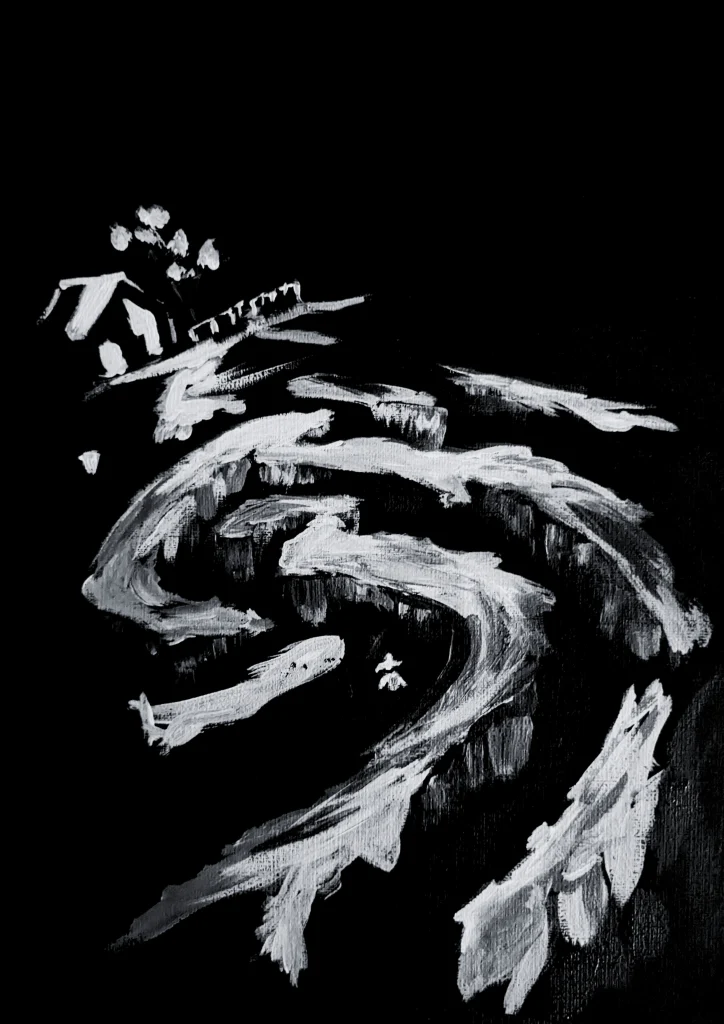
That doesn’t mean I ignore how things are put together. Sometimes I need to understand the full shape of something before I can work out which bits to leave out.
But understanding it and painting all of it are two different things.
A shoulder might not connect quite where you’d expect. A face might be suggested by a few uneven marks. The light might catch something in a way that wouldn’t make perfect sense in the real world.
If it makes the painting stronger, I’m quite happy with that.
I don’t want every painting to look like a photograph. We already have cameras for that.
What interests me is the feeling of the subject. Its character, its movement, the little bit of mystery that makes you look again.
Sometimes a technically correct addition can spoil that feeling.
You can explain too much.
And once you’ve explained everything, there’s not much left for the person looking at the painting to discover.
The space around something changes the something
Here’s where negative space becomes really interesting to me.
It’s not simply about having less paint on the canvas.
The darkness changes the way you see whatever remains.
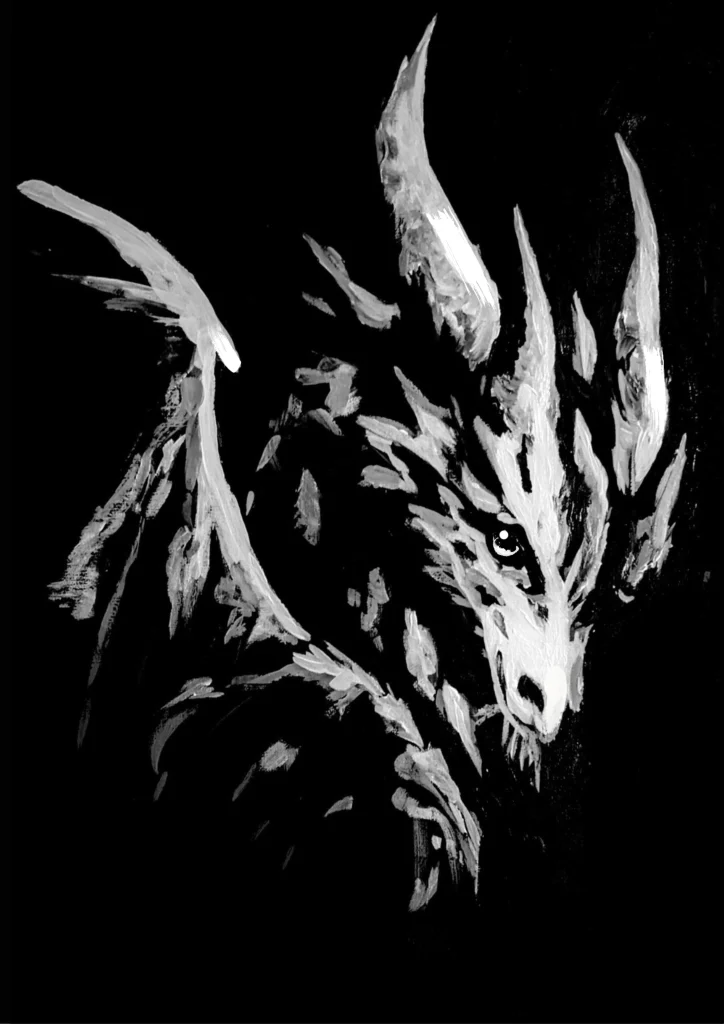
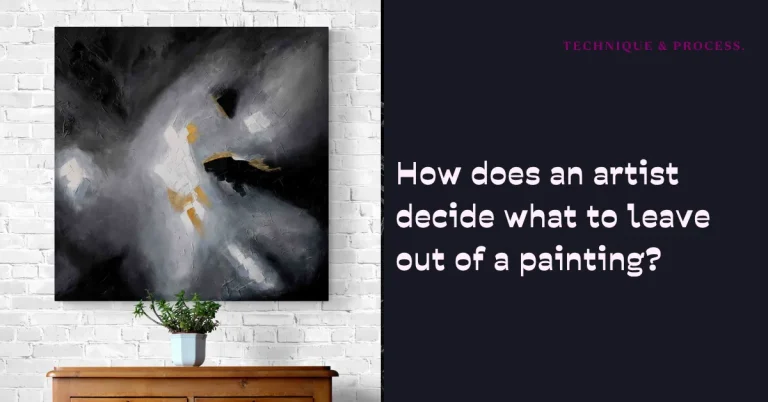
A single bright eye surrounded by black can feel incredibly intense. A figure with most of its body missing into shadow can seem to be stepping towards you, or retreating somewhere you can’t follow.
A few pale marks on a black surface can suggest an enormous amount of movement.
If I filled in all the missing information, I might end up with a perfectly understandable subject but a much less interesting painting.
The black gives the visible parts room to have some presence.
It can make a small detail feel important. It can create tension. It can leave you wondering what else might be hiding just beyond the light.
And sometimes it’s simply a lovely way of balancing a composition.
Not every dark patch needs a grand symbolic meaning. Sometimes it just looks better that way.
There’s a difference between simple and easy
I’ve been experimenting with paintings made from very few brushstrokes.
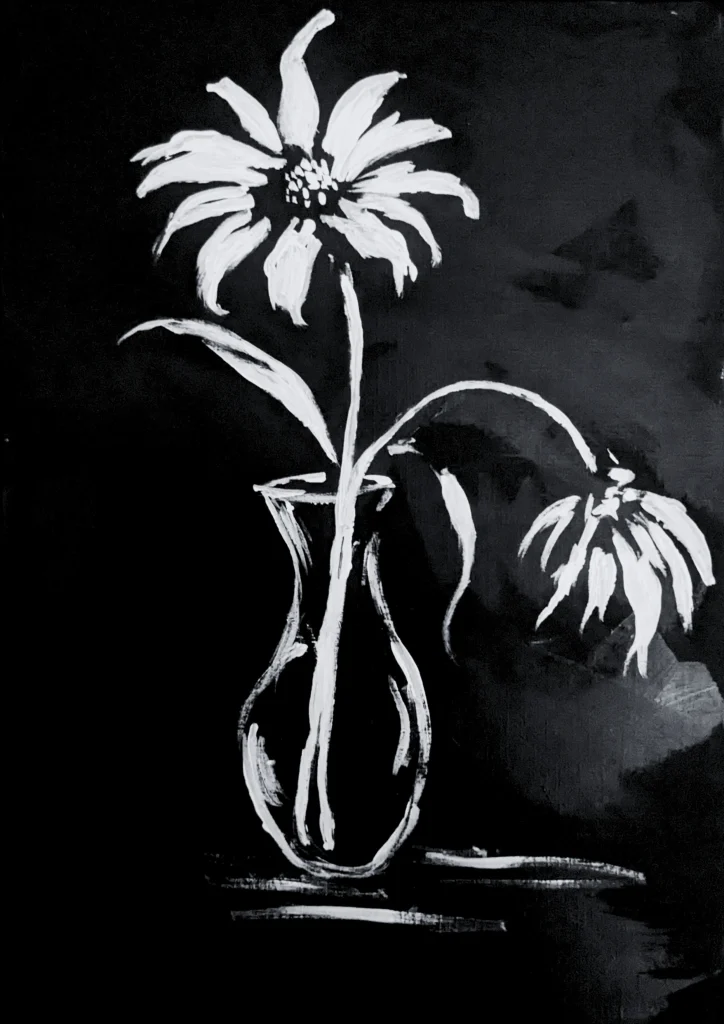
It’s an interesting challenge because there’s nowhere to hide.
With a more detailed painting, you can adjust little areas as you go. You have more information to work with.
When you’re trying to suggest an entire subject with a handful of marks, every one of those marks has a job to do.
The angle matters. The weight of the stroke matters. The gap between two shapes can matter just as much as the shapes themselves.
And if you add too much, you can lose the very thing that made it interesting.
That doesn’t mean the simplest-looking painting is necessarily the quickest to make.
Sometimes the hard part isn’t putting the paint on.
It’s deciding what doesn’t need to be there.
I also don’t think every subject wants the same treatment. Some paintings need a little more structure. Others are happier when I loosen up and let the brushstrokes do their own thing.
I’m still experimenting with that balance, and I expect I always will be.
Leaving room for somebody else’s imagination
One of the things I love about art is that two people can look at the same painting and see entirely different things.
One might notice the expression. Another might be drawn to the movement. Someone else might invent a whole story about what’s happening beyond the edge of the light.
I don’t particularly want to explain every little detail.
If I’ve painted a strange character emerging from the dark, you don’t necessarily need to know where they’ve come from, what they’re thinking, or what happens next.
You can decide that for yourself.
The areas I’ve left unpainted give you somewhere to take the story.
And I think that’s part of the pleasure of owning a painting. You get to live with it, notice different things, and occasionally wonder what on earth the artist was thinking.
Sometimes I wonder that myself.
So how do I know when it’s finished?
I wish I had a clever answer.
There isn’t a formula where I decide that a painting needs exactly so much black, a particular number of highlights, and precisely three dramatic brushstrokes.
I work on it. I stand back. I look for what feels out of balance.
If something bothers me, I try to work out why.
Sometimes the white pencil helps. Sometimes another brushstroke does it. Sometimes I need to take half of what I’ve just painted away.
And sometimes I need to leave it alone until tomorrow.
The aim isn’t to make everything technically perfect.
It’s to reach that point where the subject has enough presence, the marks feel right, and the darkness is doing its share of the work.
Then I stop.
Preferably before I decide to improve it and ruin the whole thing.
Because sometimes the most useful thing I can do with a paintbrush is put it down.