The Painting Was Better Ten Minutes Ago
On leaving things out, painting over the bits that don’t work, and knowing when to start again.
There’s a particular moment in painting that I suspect a lot of artists know rather well.
You stand back, look at what you’ve made, and think, yes, that’s coming along nicely.
Then you decide it needs just one more little thing.
Ten minutes later, you’re wondering what on earth possessed you.
I’ve done it more times than I care to count. A painting can have all sorts of energy and character, and then I start fussing with it. A little more detail here, another mark there. Suddenly the thing I liked about it has disappeared under all my helpful improvements.
It’s annoying, of course. But it’s also part of the fun of painting the way I do. I can change direction, take something away, or paint straight over the lot and have another go.
Sometimes the best decision is not what to add. It’s what to leave alone.
The trouble with one more brushstroke
When you’re painting something recognisable, it’s very tempting to keep explaining it.
A face could have a more complete nose. An animal could have another leg. A figure could do with a clearer outline. All perfectly reasonable suggestions, until you realise that the painting was stronger when it made you do a little of the looking yourself.
I work across different subjects and styles, from more selectively lit figures to rough, chunky shapes and very spare brushstrokes. I’m not aiming for photographic realism. I want the subject to have presence, and sometimes that comes from a few awkward, energetic marks rather than beautifully finished details.
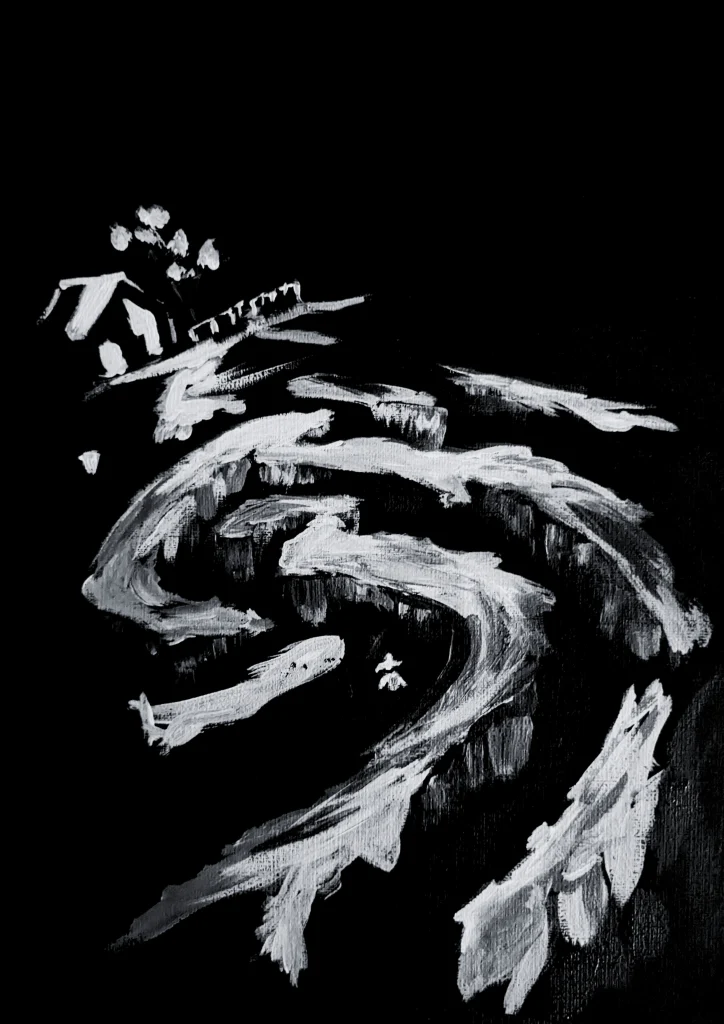
The problem is that a painting doesn’t send you a polite message saying, ‘Thank you, that’s enough now.’
You have to notice when you’ve reached that point. And I don’t always notice in time.
It’s not a question of whether the extra detail is accurate. It might be absolutely correct. It might also flatten the whole thing.
A technically convincing hand isn’t much use if the painting has lost its movement. A carefully finished face can be less interesting than an expression suggested by three marks and a bit of darkness.
That’s the sort of decision I’m making as I go. Not ‘Have I painted everything?’ but ‘Does this need anything else?’
What stays, what goes
There’s a difference between removing detail because you can’t be bothered and leaving it out because the painting is better without it.
For me, the second one is the interesting part.
I might begin with an idea of the subject, but I don’t want to spend the whole session obediently colouring in a plan. I like to follow what the painting is doing. Sometimes a mark lands in an unexpected place and suddenly gives the figure more attitude. Sometimes a shape that should make perfect anatomical sense looks completely lifeless.
So I keep what has energy and question what doesn’t.
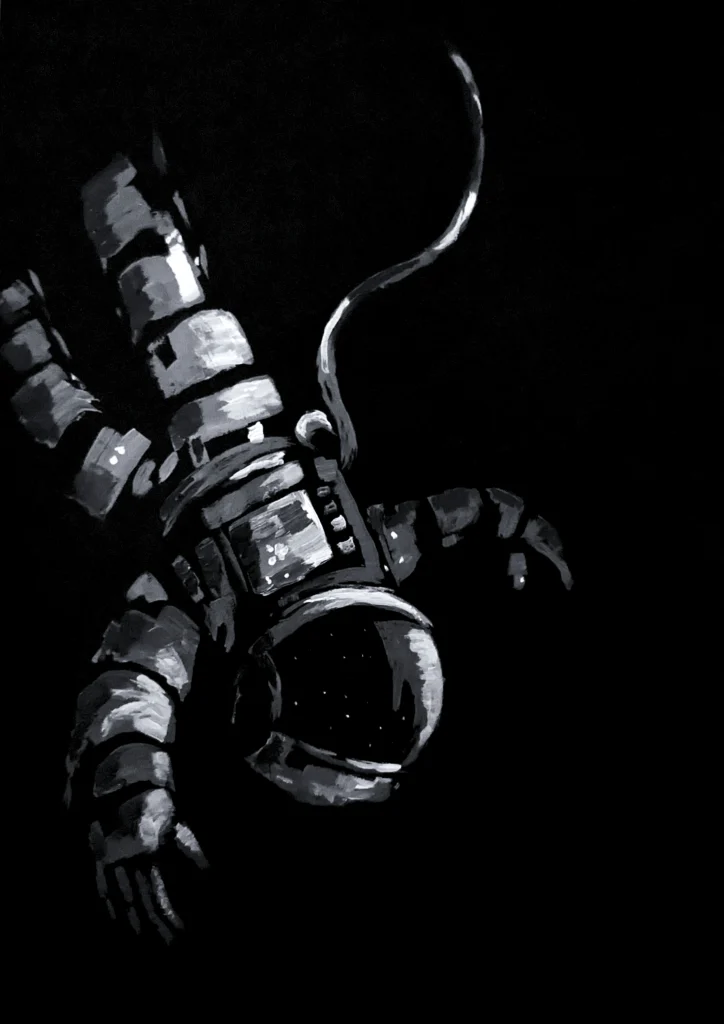
That might mean leaving part of a face unfinished, letting an arm disappear, or allowing a brushstroke to stand in for a much more complicated shape. If it feels right, I’m quite happy for it to be technically wrong.
Years of working in visual design have probably made me particularly sensitive to balance. I notice when one part is shouting over everything else, or when a composition has lost its centre of gravity. But painting gives me the freedom to be much less tidy about how I fix it.
I don’t want everything to be neat. I want it to work.
And those are not always the same thing.
Sometimes I can save half of it
Not every painting that goes wrong needs to disappear completely.
There are times when one area is doing exactly what I wanted and another area has wandered off into nonsense. In that case, I might paint over half the canvas and keep the part that still has something going for it.
It’s a peculiar feeling, deliberately covering something you’ve spent time making. But the time is already spent. Keeping a section just because I worked hard on it doesn’t make the painting any better.
And painting over a section can be surprisingly liberating. Suddenly I’m not trying to make the awkward bit fit with everything else. I’ve given myself space to find another solution.
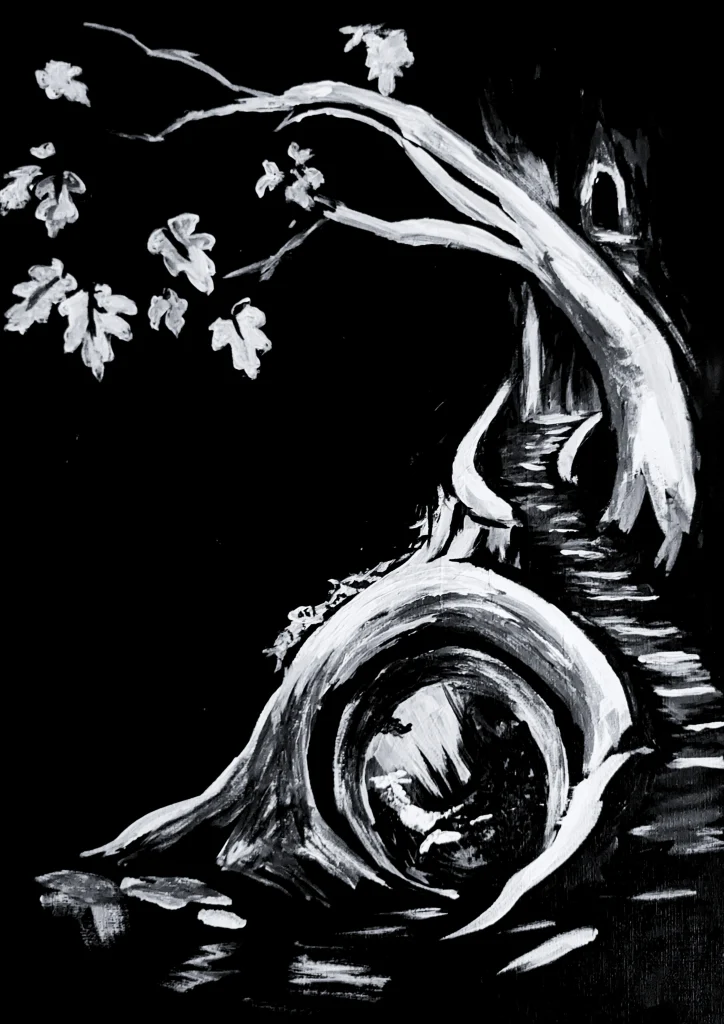
Sometimes the new version is better. Sometimes I make another mess. That’s painting.
I don’t think of the covered-up section as wasted effort, either. It helped me find out what wasn’t working. That’s useful information, even if nobody else ever sees it.
And sometimes there’s nothing worth saving
Then there are the paintings where you stand back, look at the whole thing, and think: no.
Not ‘it needs a little adjustment.’ Not ‘perhaps another highlight will fix it.’ Just no.
When that happens, I usually take the canvas back to black.
I paint over the whole thing and start again. No ceremony. No attempt to preserve one heroic little corner so the previous effort wasn’t for nothing.
That’s one of the things I really enjoy about working this way. I’m not so invested in a particular subject that I have to make it succeed. I enjoy painting. I enjoy finding out what a subject might become. If one attempt doesn’t work, there are plenty more possibilities waiting.
It doesn’t mean I’m delighted every time I ruin something. I can be thoroughly irritated with myself. But I don’t need to turn that irritation into an obligation to rescue a painting that has nothing left to offer.
The canvas is still there. The paintbrush is still there. I can begin again.
Why I don’t want a perfect plan
If I knew exactly what every painting would look like before I began, I think I’d get bored rather quickly.
Part of the pleasure is discovering it as I go. The subject might start in one direction and end up somewhere else. A few rough marks can suggest something I hadn’t planned. Or I might realise that what I thought was the important part of the image isn’t important at all.
That kind of discovery requires a bit of freedom to get things wrong.
Of course, I still make decisions about light, shape and composition. I still step back and look carefully. I’m not just waving a brush about and hoping for the best.
But I don’t want every decision to be dictated by what the subject is supposed to look like. I want to respond to what’s actually happening on the canvas.
Sometimes that means adding a mark. Sometimes it means covering three. Sometimes it means putting the painting aside and looking at it again later, when I can see it without all the effort of making it still buzzing in my head.
And sometimes it means admitting that the best thing I painted was the black background underneath it.
What leaving things out really means to me
People often talk about simplifying a painting as though it’s a matter of doing less work. I don’t think it’s quite that straightforward.
You still have to make choices. Which marks carry the character? Which shapes explain the movement? What’s distracting from the part you want people to notice?
The less you put in, the more each decision matters.
With a detailed painting, you can give the viewer lots of information. With a handful of brushstrokes, you have to decide which information is worth keeping.
I like that challenge. I like the moment when something suddenly reads as a face, a creature or a figure even though much of it isn’t there. I like when the viewer gets to finish a little of the picture in their own head.
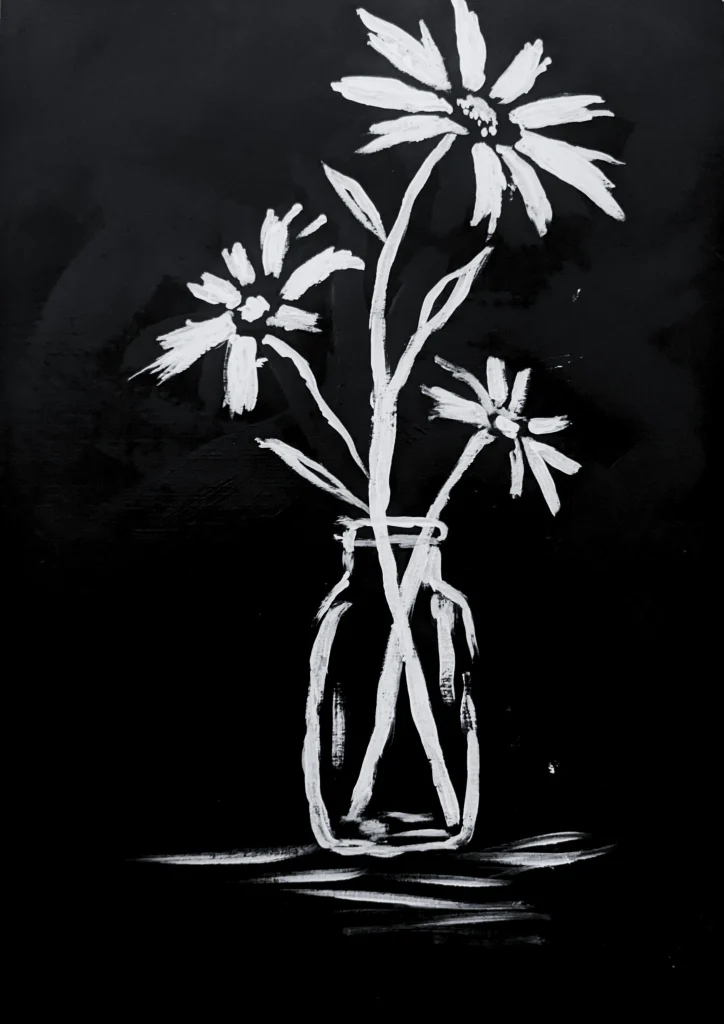
But I also like that there’s no rule saying every painting must be equally minimal. Some subjects need a bit more. Some need almost nothing. I’m still working out those differences every time I paint.
So how do I decide what to leave out?
I look for what gives the painting its character, and I try not to smother it.
That sounds simple enough. In practice, it involves plenty of standing back, changing my mind, adding things I later regret and occasionally painting half the canvas black again.
I don’t measure success by how much detail I’ve managed to squeeze in. I want the finished piece to have a life of its own.
If a painting is stronger with less, I leave less. If it needs another mark, I give it one. If it’s gone beyond saving, I start over.
And if I catch myself thinking, ‘Just one more little thing,’ I really ought to pay attention.
Because there’s a fair chance the painting was better ten minutes ago.
Related articles