
How I Paint With Light and Shadow
Four paintings, one black starting point, and absolutely no guarantee they’ll turn out the way I imagined.
There’s something quite wonderful about a blank black canvas. It could become almost anything.
Of course, that also means there’s an impressive number of ways to get it wrong.
At the moment, I’m painting a lot. Different subjects, different approaches, different ways of getting an idea out of my head and onto a canvas. Some work. Some don’t. And occasionally something happens that I wasn’t expecting at all.
The one thing connecting most of them is the darkness.
I don’t paint a complete picture and then add shadows. I start with black and see how little light I need to bring something into view.
A little world hiding in the dark
Look at this tree. There’s a staircase winding upwards, a little doorway, branches reaching across the painting and something that looks like another world tucked inside the trunk.
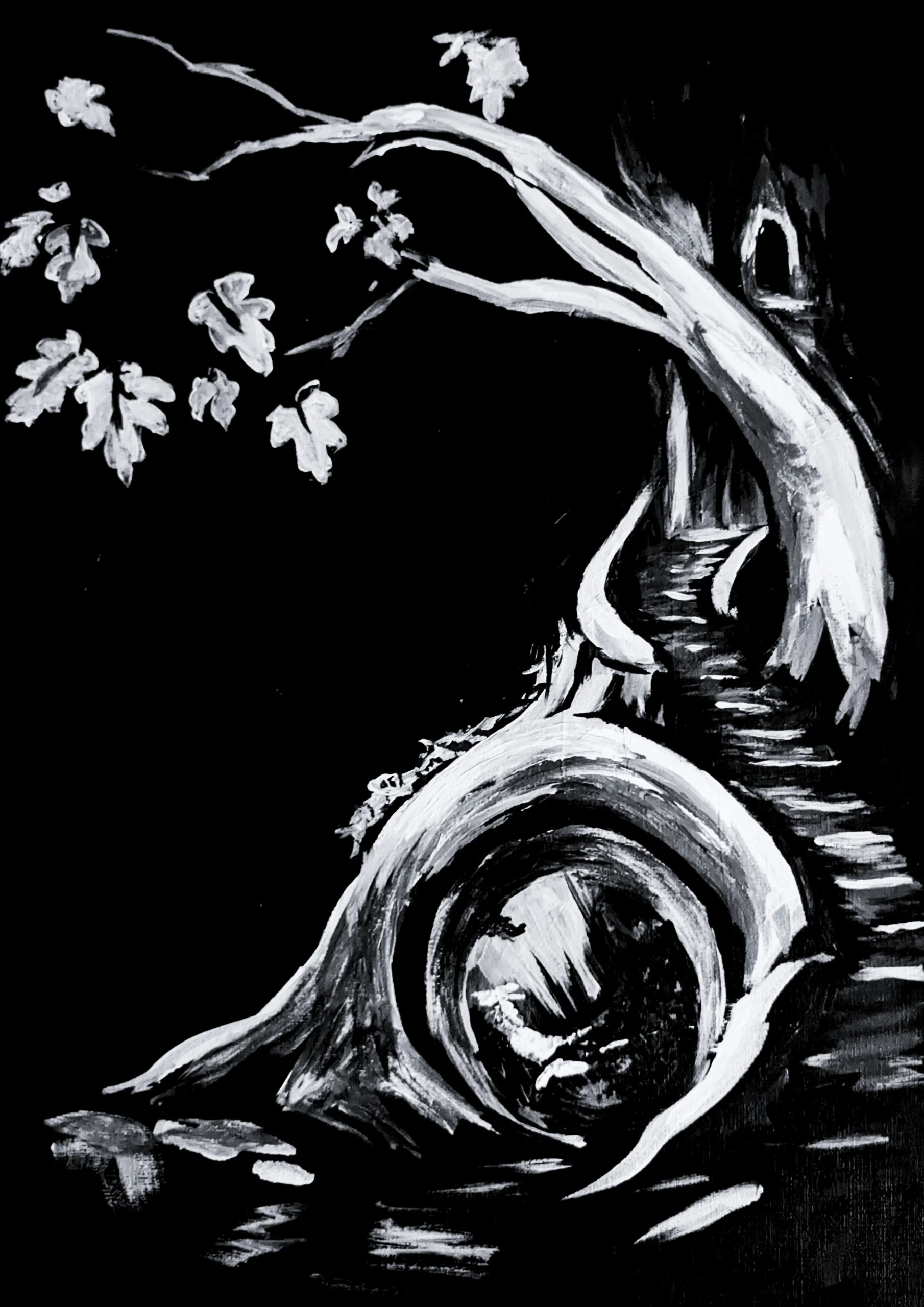
But most of that world doesn’t exist on the canvas.
There’s no painted sky, no detailed landscape stretching into the distance, no explanation of where those stairs lead.
Just enough to suggest that somewhere beyond the black, there’s a whole lot more going on.
I rather like not knowing what’s up there.
And I like that you might imagine something completely different from what I do.
How much dragon do you actually need?
A dragon is a completely different proposition.
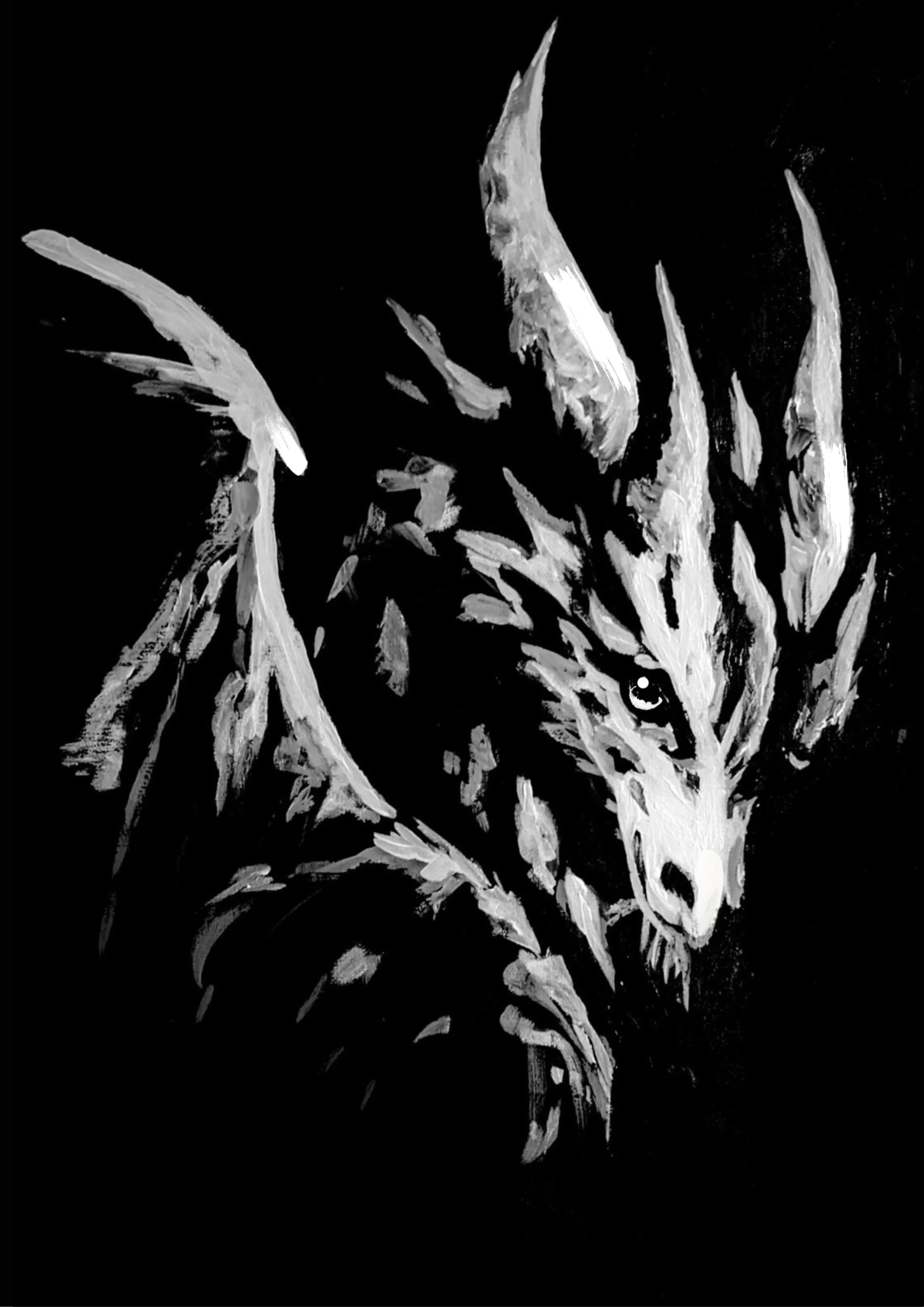
You could spend days painting scales, wings, claws and all the other bits that make a dragon a dragon.
Or you could give it one rather magnificent eye, a few sharp highlights and let the darkness do the rest.
That’s what interests me about this painting.
Your brain knows there’s a great deal more dragon hiding in there. I don’t have to paint every inch of it.
Actually, painting every inch would probably ruin the thing.
Then I start breaking everything into pieces
The astronaut takes another approach entirely.
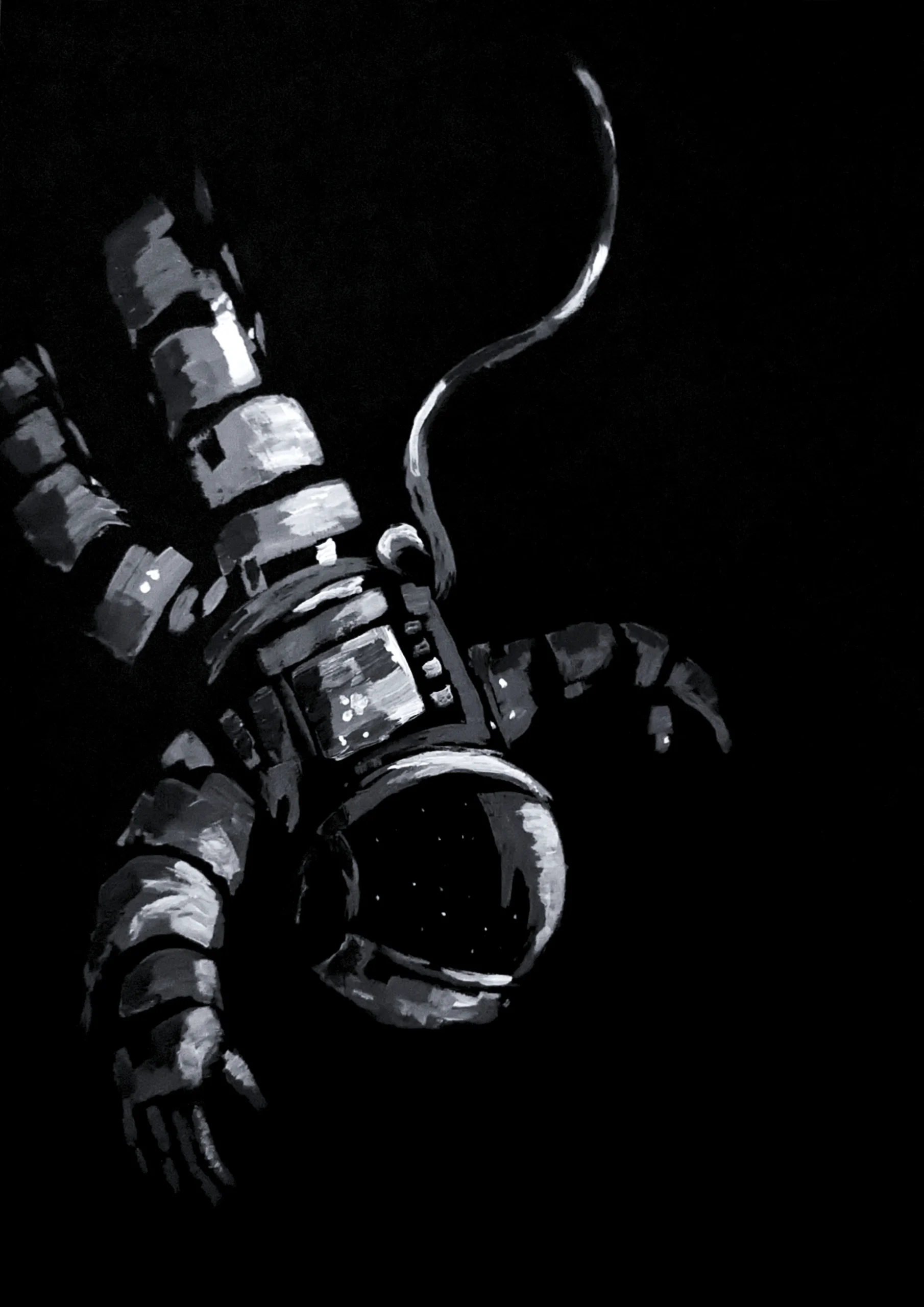
Instead of flowing highlights and carefully chosen details, I’ve used chunky, broken marks to build the suit.
A few blocks of grey, some brighter edges, a dark visor and suddenly there’s an astronaut floating in space.
It’s a much rougher way of working.
And that’s part of what I’m experimenting with right now. How far can I simplify something before it stops making sense?
Sometimes I find out the hard way.
But I love the freedom of not having to make every painting look as though it belongs to the same perfectly behaved family.
And sometimes a few lines are enough
Then there are these flowers.
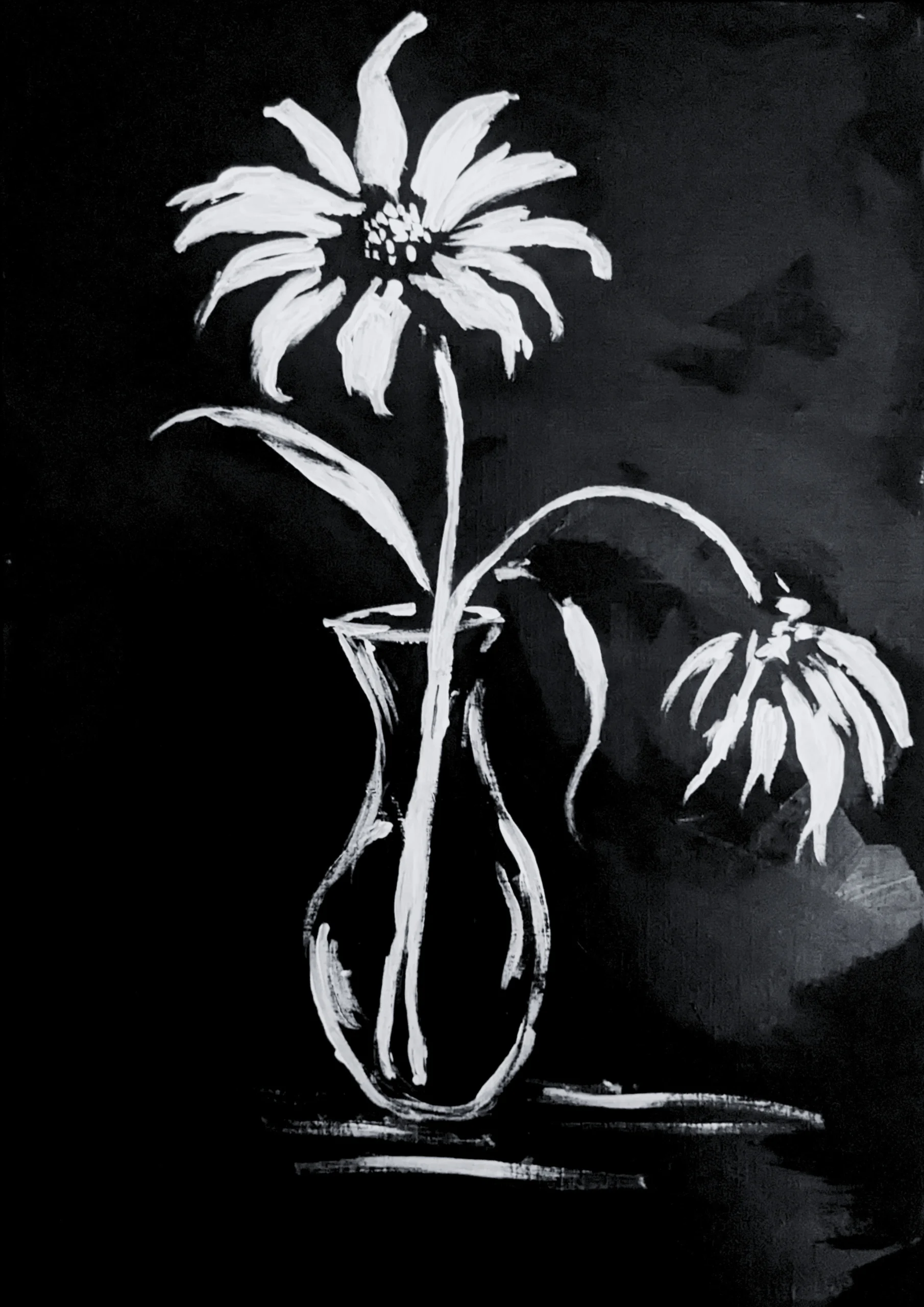
No mysterious staircase. No enormous dragon. Nobody drifting through space.
Just a vase, a few stems and some rather unruly petals.
The vase barely exists. A few lines give it shape, and the black canvas does the rest.
The flowers are loose and imperfect. You can see the brushstrokes instead of a carefully polished surface.
And I think that’s what I enjoy most about painting this way.
A mark doesn’t have to describe everything. Sometimes it only has to suggest enough for you to recognise what’s there.
So where does all this lead?
I haven’t decided. And for once, I’m quite happy about that.
I’m exploring different styles, painting as much as I can and putting the results out into the world rather than waiting until I’ve developed some supposedly perfect collection.
Part of the fun is discovering which paintings people connect with. It might be the strange dragon, the quiet flowers or an astronaut who looks as though he’s having a particularly bad day.
I’m also keeping much of this work small and making original handmade paintings and selected fine-art prints available at more accessible prices.
Because I don’t think you should need a gallery-sized wall or a gallery-sized budget to live with something original and interesting.
And if one of my paintings makes you stop scrolling for a moment, look a little closer and wonder what’s hiding in the dark, I’ll be rather pleased.
You can explore my current paintings in the Artwork gallery, with originals available through eBay and selected prints through Etsy.