
I Start in the Dark and See Where the Light Takes Me
Why I paint on black, and how the light sometimes changes the plan.
I usually know what I want to paint before I pick up a brush.
That doesn't mean I know exactly what the finished painting will look like. Those are two very different things.
I might have a figure, a creature, a face or a strange little scene in mind. I can picture the general feeling I'm after. Then I begin putting white and grey onto a black surface, and the painting starts having opinions of its own.
A shadow needs more depth. A bright area pulls too much attention. A shape I thought would be important turns out to be better left in the dark.
So the original idea is a starting point, not a contract.
That's one of the reasons I like painting this way. I get to find out what the light will do instead of having every inch worked out in advance.
Why start with darkness?
I always prepare my painting surface dark, and at the moment I mainly work in black. I'm not beginning with a white canvas and gradually filling in the background. The darkness is there from the start.
That means my first visible marks have a very different job. A bit of white isn't simply a highlight on an already completed object. It can be the first clue that an object exists at all.
A curve might become a cheek. A short, rough mark might suggest the edge of a coat. A few shapes might suddenly read as a bird or a person turning towards the light.
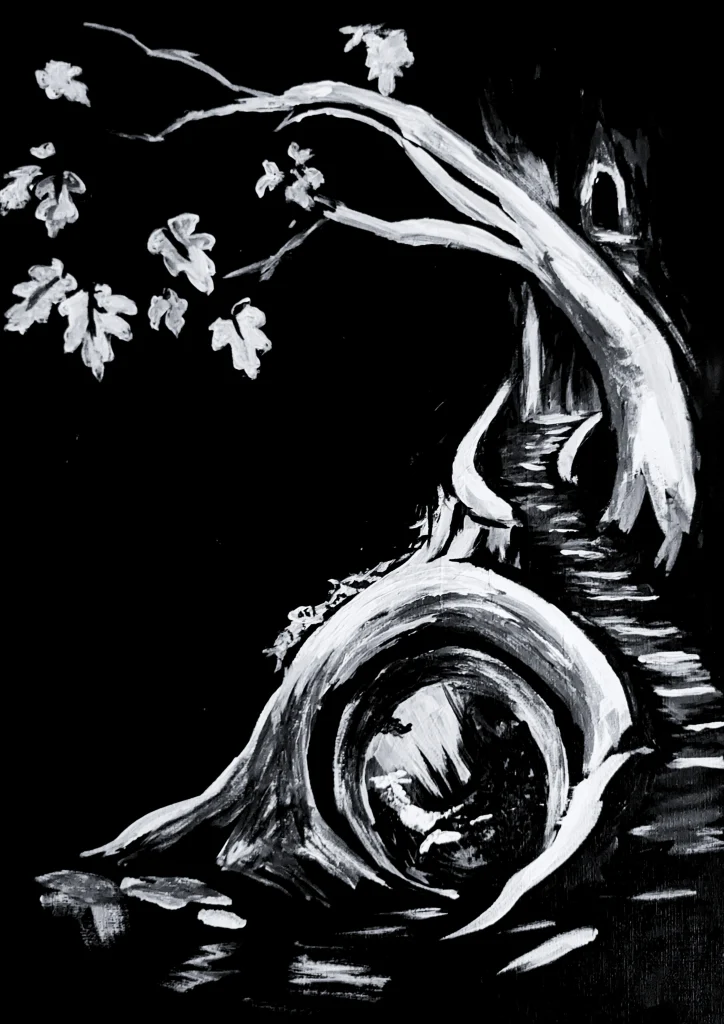
I find that exciting. There can be very little on the canvas, and then, almost without warning, the subject starts to appear.
Working dark also changes what I pay attention to. Instead of asking how to fill every area, I'm looking at which parts need to be seen. I can give the light somewhere to land, and let the rest remain quiet.
The black itself isn't necessarily uniform. My black gesso has a flatter, matte finish, and the black acrylic I add as I paint can catch the light differently. I don't cover the whole surface with that second black. On an original painting, those two finishes can sit together even before the white and grey tell you what the subject is.
But the real fun begins when I start deciding how much light to bring in.
Sometimes I go straight in with white
If I want a painting with strong contrast, I often put down quite a lot of white first.
On black, that gives me something bold to work with immediately. I can establish the lit areas, see the shapes more clearly, and then work shades over the white to bring in depth and shadow.
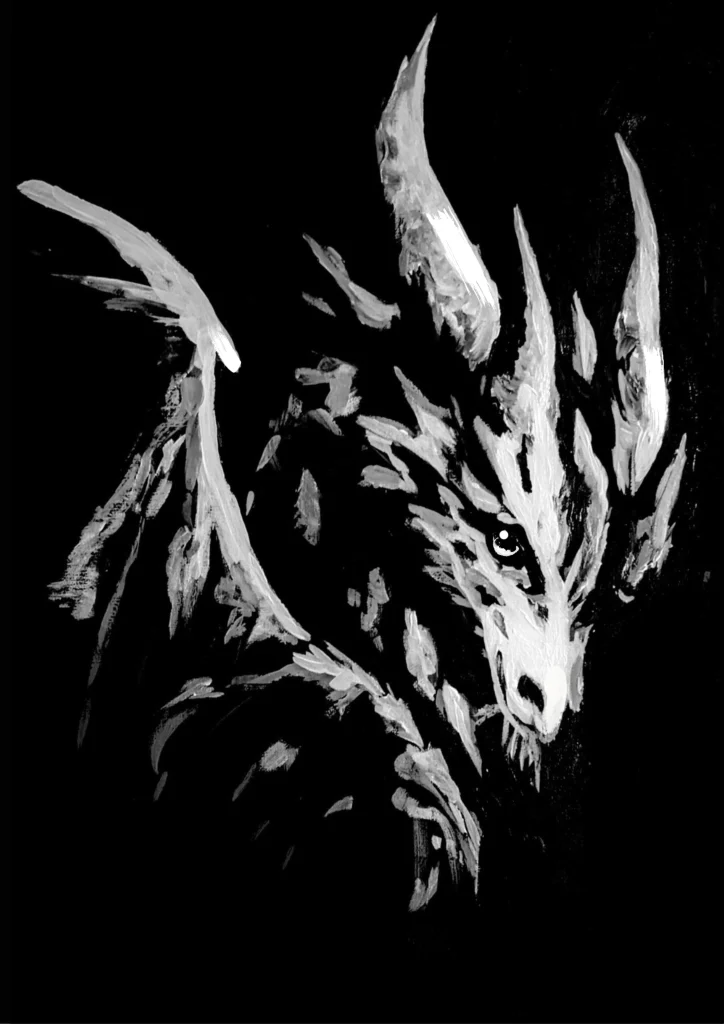
It's not a tidy little exercise where I paint a highlight and leave it untouched forever. The white can be changed, softened, interrupted or pushed back as the painting develops.
An area that looks wonderfully dramatic on its own might be too bright once the rest of the subject appears. Or a shape might need a darker passage through it so it doesn't look flat.
That's when the greys become particularly useful. They can turn a bright shape into something with weight. They can suggest the way a surface bends, or separate one part of the subject from another without spelling out every detail.
And sometimes I discover I've been too generous with the light. A painting that was supposed to have a little mystery suddenly looks as though somebody has switched on all the lights in the room.
Then I have to decide what needs to retreat.
Other times I creep towards the light
Not every painting wants that strong black-and-white punch.
When I'm after something softer, I work differently. I might begin with darker greys or black and build the lighter areas gradually.
That gives the subject a quieter way to emerge. Instead of a bright mark announcing itself immediately, the shapes can develop through smaller changes in value.
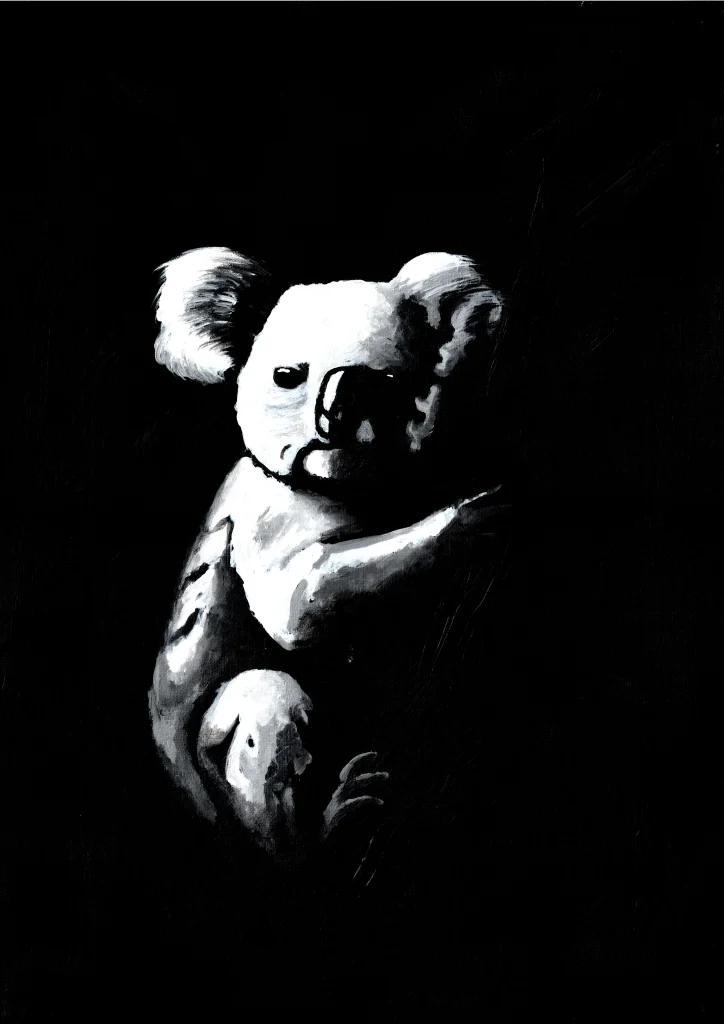
The difference can be surprisingly big. A figure built from soft greys might feel distant or thoughtful, while the same general subject in sharp white against black could feel almost confrontational.
Neither approach is automatically better. They just create different moods, and I enjoy having both available.
Sometimes I start with one effect in mind and realise partway through that the painting wants the other. A soft area needs a stronger accent. A dramatic highlight needs to settle down. I change course.
It's my painting. I'm allowed.
The light tells me what isn't working
One of the useful things about adding light to a dark surface is how quickly it exposes an imbalance.
A bright patch attracts attention whether I intended it to or not. If it sits in the wrong place, the whole composition can feel off. If too many parts are equally bright, I can lose the point I wanted people to notice.
That doesn't mean I follow a strict rule about where every highlight belongs. I do think about the direction of the light, and sometimes I need to remind myself where it's coming from. But I'm more interested in whether the painting feels convincing on its own terms than whether every mark passes a realism test.
If the shadows need more depth, I give them more depth. If an edge looks too definite, I might lose part of it back into black. If a little white mark gives a character exactly the expression I wanted, I don't need to explain the rest of the face.
I'm looking for balance, movement and presence.
Sometimes I use my white pencil to sketch a possible shape or remind myself of the light source. It's a handy way to see what might be missing before I commit more paint. And sometimes the answer is that nothing is missing; I've simply put too much in.
I don't always solve it immediately. There are paintings I set aside while I work on something else. Coming back later can make the problem much easier to see.
A little light can do a lot of talking
The part I enjoy most is when the painting begins to say something with surprisingly little information.
An eye appearing out of the dark can change the whole character of a face. A narrow highlight can suggest a shoulder turning. A few rough strokes can make a figure feel as though it's moving, even if you can't see the complete figure.
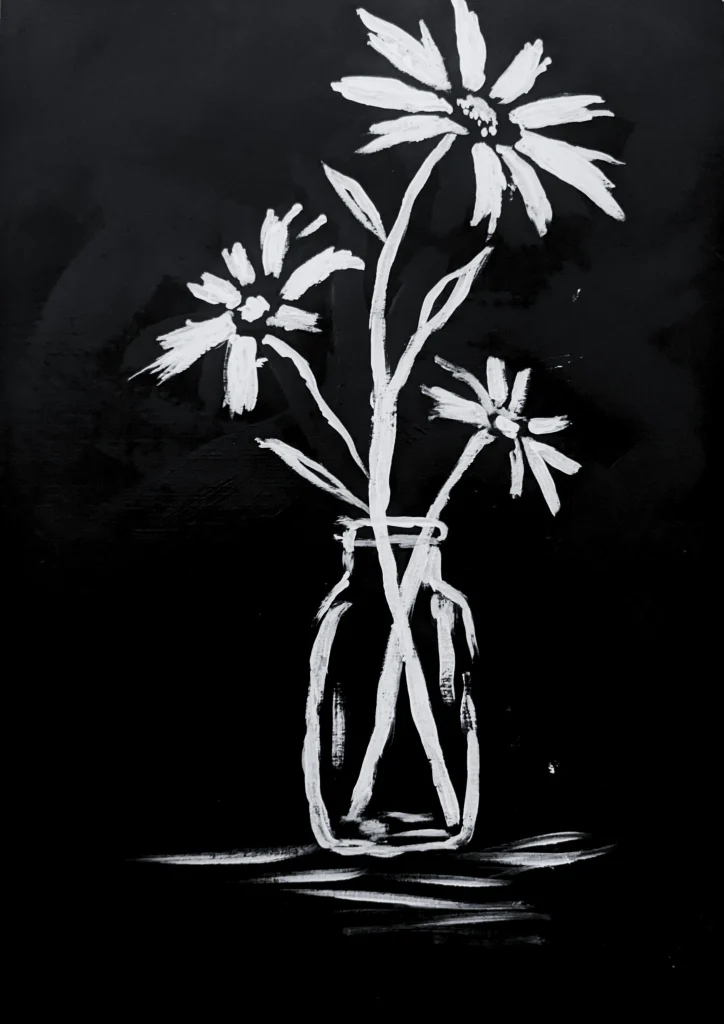
That's where I like to leave some room for the person looking at it.
You don't necessarily need every outline, every fold of fabric or every feather. You need enough to recognise the subject and feel something about it. The missing parts can be just as interesting as the visible ones.
I also like that the marks don't have to be perfectly smooth. Some of my paintings are more carefully lit; others are chunky, awkward or made from only a few expressive strokes. I can use the same dark starting point and end up somewhere completely different.
The light helps decide what sort of painting it will become.
And no, it doesn't always behave
Of course, there are days when I put down a lovely bright shape and then spend the next twenty minutes trying to work out why everything around it looks wrong.
Sometimes I can adjust the greys and get the depth back. Sometimes I need to cover part of the painting and rebuild it. And sometimes I decide the whole idea has had its chance and return the canvas to black.
I'm quite comfortable doing that. I enjoy the process of painting, and I don't need every subject to survive simply because I started it.
It's one of the freedoms of working this way. The black surface is always there to begin again.
Where the painting ends up
I still begin with an idea. I like having something to chase.
But I don't want the original idea to stop me noticing a better possibility once the paint is on the canvas.
Some paintings need bright white from the beginning and shadows worked back over it. Others need to emerge slowly through darker greys. Some change direction halfway through, and that's often when they become interesting.
What I'm after isn't a perfectly lit object. It's a painting with enough character to make you stop and look.
If the light takes me somewhere slightly unexpected, that's fine by me.
I started in the dark. I was never going to see the whole journey from the beginning.
Related articles