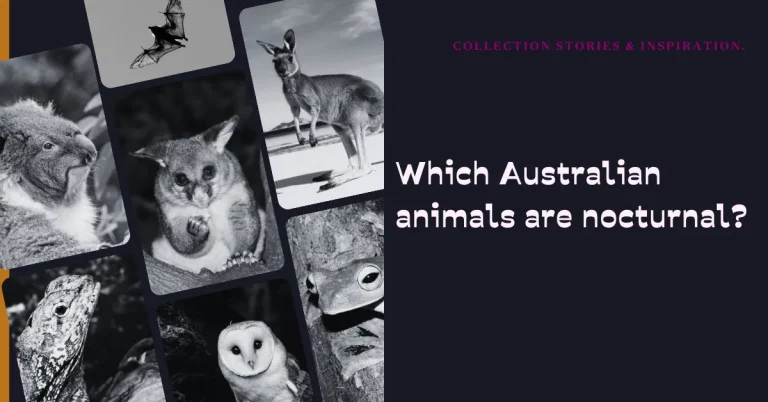
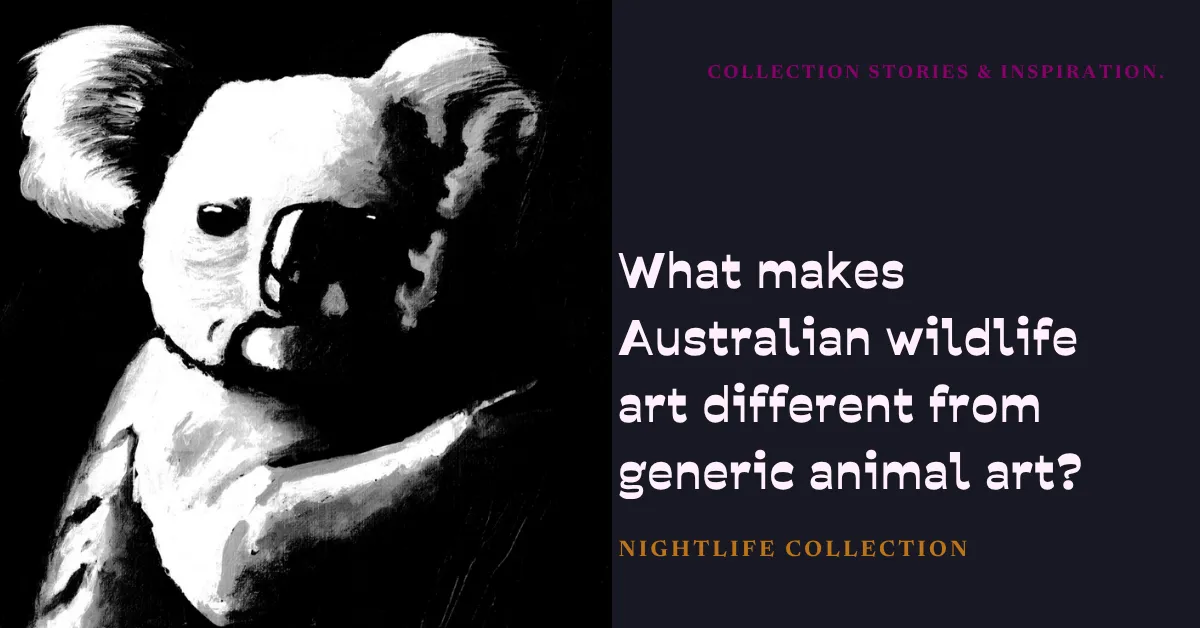
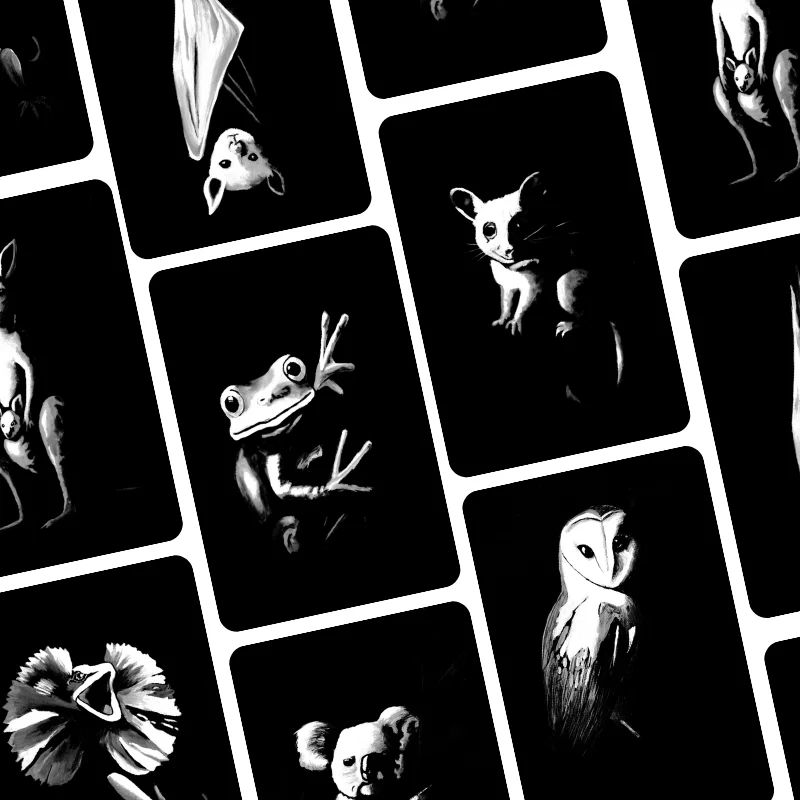
Australian wildlife art is different because it carries a lived-in energy. It’s not about painting a perfect, posed animal from a reference photo. It’s about capturing the fleeting, real-life moments you actually experience: a possum caught in a torchlight, a frog staring at you from the laundry sink, a kangaroo standing still in the dark. It’s deeply personal, deeply Australian, and it doesn’t try to be anything else.
The difference between a photo and a moment
Here is the thing about generic animal art. A lot of it is based on reference photos.
You see a beautiful shot of a lion in the wild, or a crisp image of a hummingbird mid-flight, and the artist paints it perfectly. It is technically stunning. It captures every feather and every muscle.
But it also feels a little… sterile.
It feels like a photo that happens to be painted. It doesn’t carry the feeling of being there. It doesn’t capture the unexpected moment, the brief flash of eye contact, the split-second encounter that you still remember years later.
Australian wildlife art, at its best, is different. It captures the moments you actually live.
The moments that make Australian wildlife art special
Let me give you a few examples.
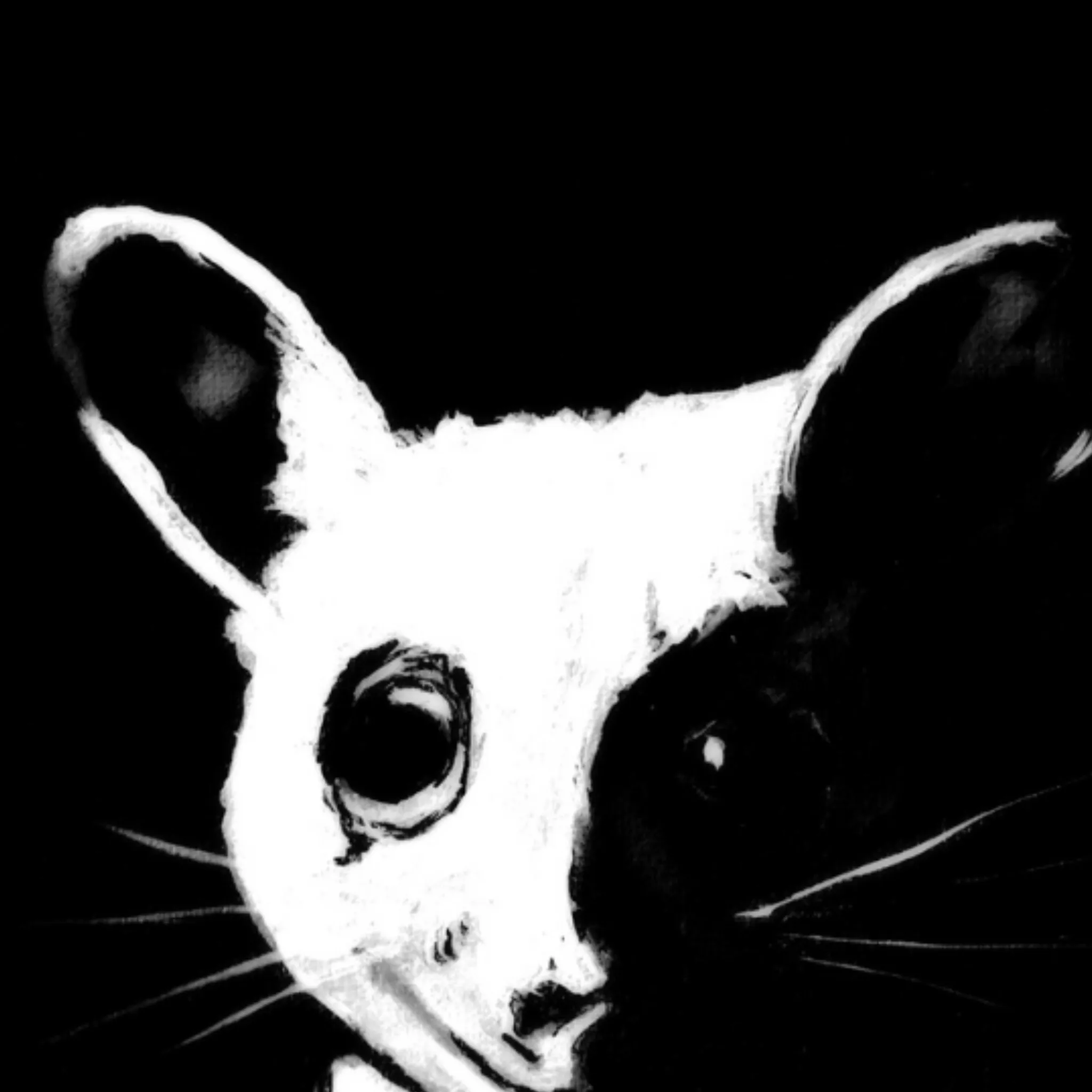
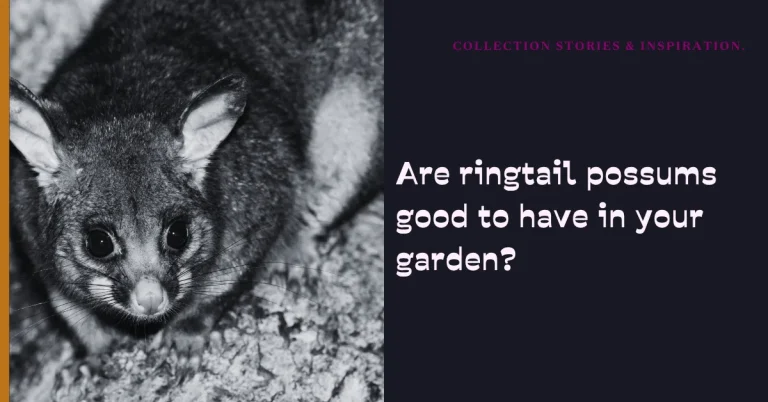
You don’t photograph a ringtail possum in a studio. You meet one at 2 AM in Brisbane, wrapped in a towel, held up to the torchlight. Wide-eyed. Confused. Gone a second later.
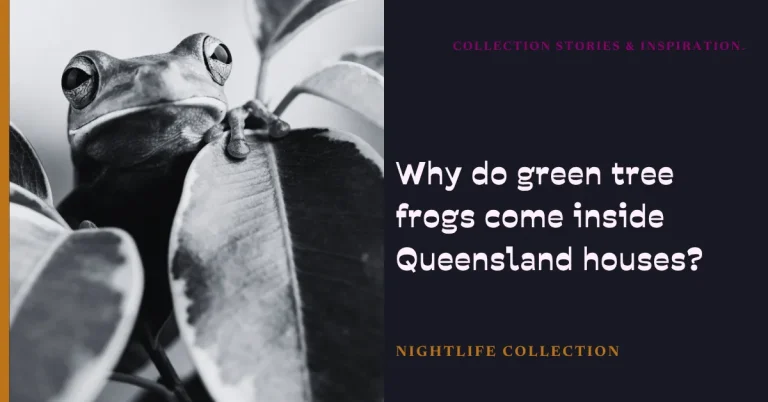
You don’t hire a model for a green tree frog. You walk into your laundry, flip on the light, and there he is. Sitting on the sink. Staring at you. Not paying a cent of rent.
You don’t set up a tripod for a kangaroo. You see her standing perfectly still in the paddock, her joey tucked into her pouch, watching you with quiet, unblinking dignity.
These are not posed moments. They are not staged. They are the real, unpolished, deeply Australian moments that happen when you are least expecting them.
And that is what makes Australian wildlife art feel different. It feels real.
How the painting process captures that energy
When I developed the painting process, I didn’t want to paint a crisp, perfectly lit portrait of an animal. I wanted to capture the feeling of a flash of light in the dark.
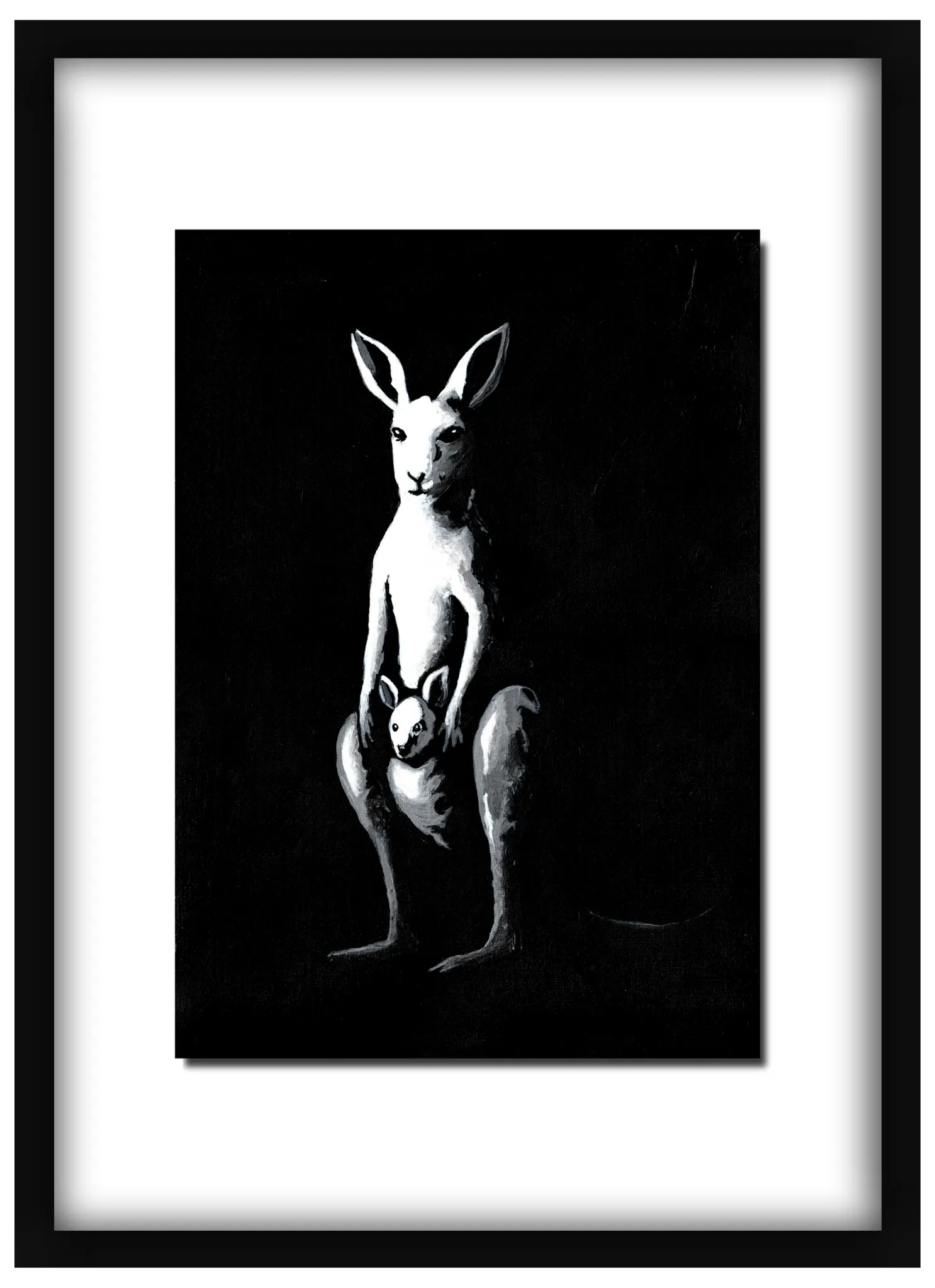
The deep gesso void is the Australian night. The white acrylic is the torchlight, the kitchen light, the unexpected moment of clarity that only lasts a split second.
The animals I paint are not performing for you. They are not posing for the camera. They are just there, caught in a moment, doing what they do when they think no one is looking.
That is why the Nightlife collection feels different. It’s not a series of animal portraits. It’s a series of brief, stolen moments from the Australian bush.
A local perspective matters
Another thing that makes Australian wildlife art unique is the perspective.
I grew up with these animals. I have listened to possums scuttling across my roof. I have watched flying foxes soaring over the treetops at dusk. I have walked into the laundry at 2 AM and found a tiny green frog staring at me from the sink.
I know them. Not as subjects to be studied, but as neighbours.
When you paint from that perspective, the work carries a different weight. It doesn’t feel like an objective study. It feels like a story you are telling.
The danger of the “cutesy” trap
Here is a trap that a lot of wildlife art falls into. It goes cutesy.
It takes a beautiful animal and paints it in bright, cheerful colours. It gives it a cartoonish expression. It turns a wild creature into a soft, marketable character.
That can be lovely, but it often loses the essence of the animal.
I have always been drawn to the opposite approach. I want to paint them the way I actually meet them. Quiet. Unbothered. Lit briefly in the dark. And then gone.
That is why I work in high contrast. That is why I work with deep voids and sharp white highlights. That is why I leave parts unpainted.
I want the viewer to feel like they are standing in the dark, catching a glimpse of something wild before it disappears into the night.
Explore the moments for yourself
If you want to see what I mean, you can explore the Nightlife collection. Each piece is a brief, stolen moment from the Australian bush, captured in acrylic on A3 paper.
Explore the Nightlife collection. Nightlife Collection Page