THE TECHNIQUE
Active Void
The surface goes dark first. Then the story surfaces.
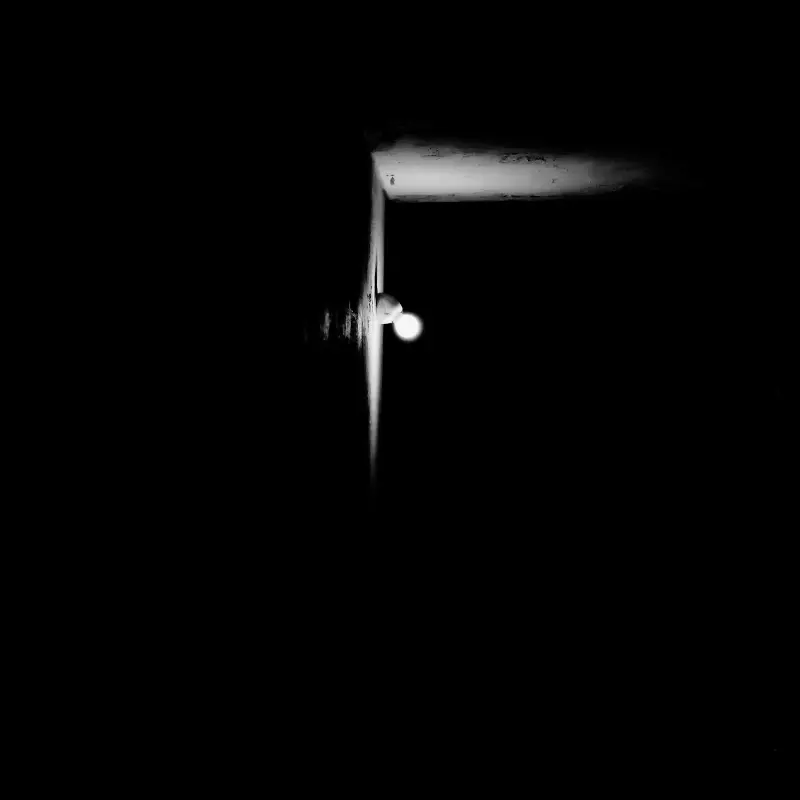
Active Void is a painting technique created by Australian artist Tina Fletcher. The surface goes dark first. Then white and shades of the background colour are added, allowing the story to surface. Whatever the light doesn’t reach stays dark. The dark is not background. It is doing half the work.
The technique is used across all Active Void Studio collections, with originals selling direct to collectors globally.
The definition
Active Void (noun)
A high-contrast painting technique in which a dark ground is laid down first and the subject is allowed to surface through the selective application of light and tone. The unreached dark areas are treated as active elements of the composition, not empty space. Developed by Australian artist Tina Fletcher.
Where it came from
It didn’t come from a textbook.
Thirty years of graphic design taught Tina one thing worth keeping: what you leave out matters more than what you put in. Active Void is that idea, with paint on it.
The name came from the realisation that the dark space wasn’t passive. It wasn’t just what was left over after the subject appeared. It was pushing the subject forward, holding the mood, doing its share. Calling it negative space felt wrong. It wasn’t negative. It was active.
How it works
Every painting starts the same way.
The surface goes dark first: a heavy coat of black gesso, deliberately textured, not smoothed out. That roughness matters. It’s what gives the finished work its depth when the white catches the light.
No pencil. Chalk goes straight onto the dark surface, loose outlines, just enough to guide the eye. Then the real work begins. White and shades of the background colour, built up slowly with dry and wet brush work, allowing the subject to surface from the dark.
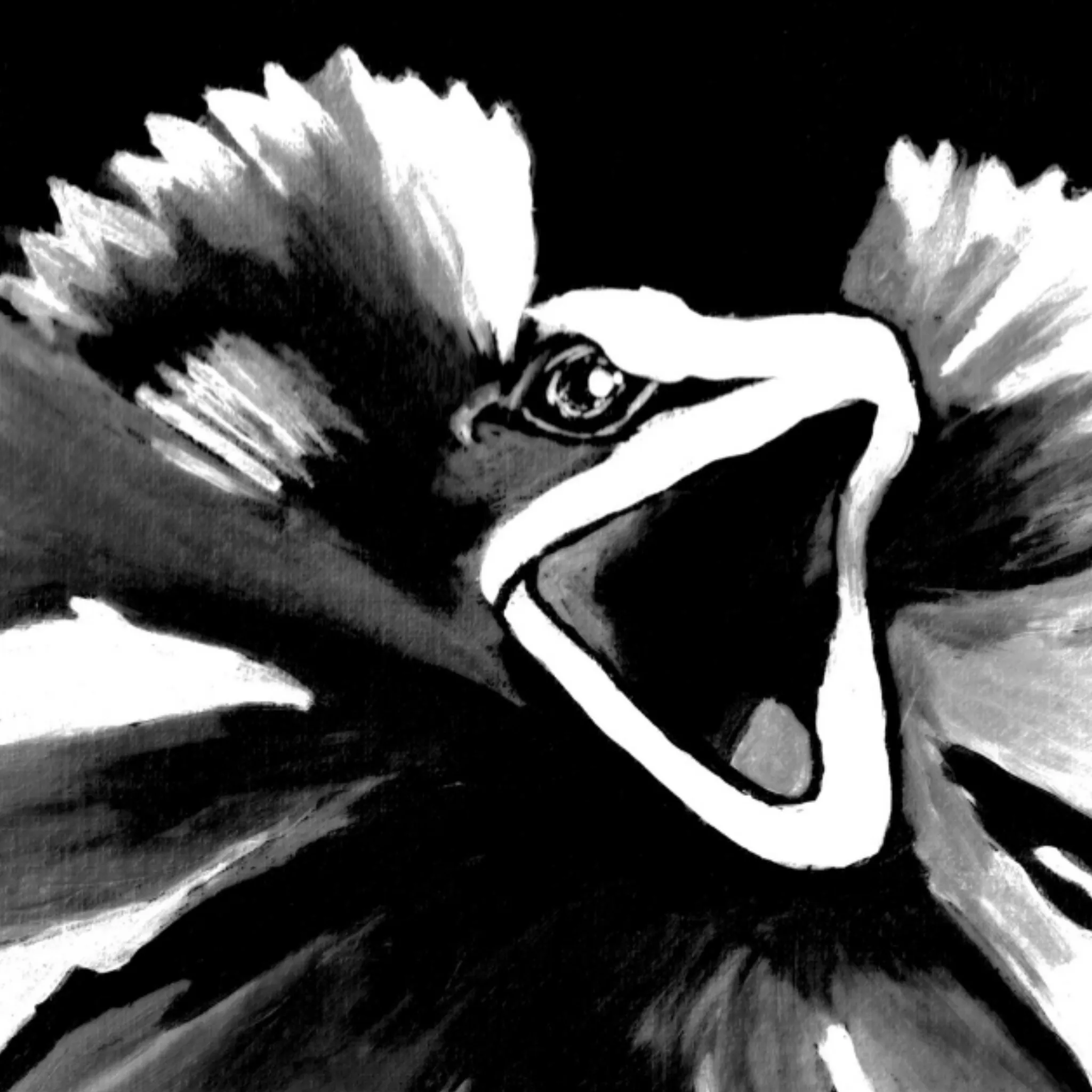
The eyes go last. A single point of white catchlight against the black pupil. That’s when it becomes a painting.
What it’s not
Active Void is not black and white art. The palette is currently monochrome, but the technique doesn’t depend on it. The same approach, dark ground first with the subject allowed to surface through light, works in teal, in deep ocean blue, in any palette where contrast does the structural work.
It is also not minimalism. The paintings are detailed. What’s missing is everything that wasn’t necessary.
The tradition it sits in
Active Void arrived by instinct, not by studying art history. But it turns out there’s a name for this approach: tenebrism, the extreme light-and-shadow technique Caravaggio used in the 1600s. Dark base, single light source, subject that seems to materialise out of nothing.
Tina didn’t set out to work in that tradition. She followed her design instincts and landed in the same territory, five hundred years later, on A3 paper with acrylic.
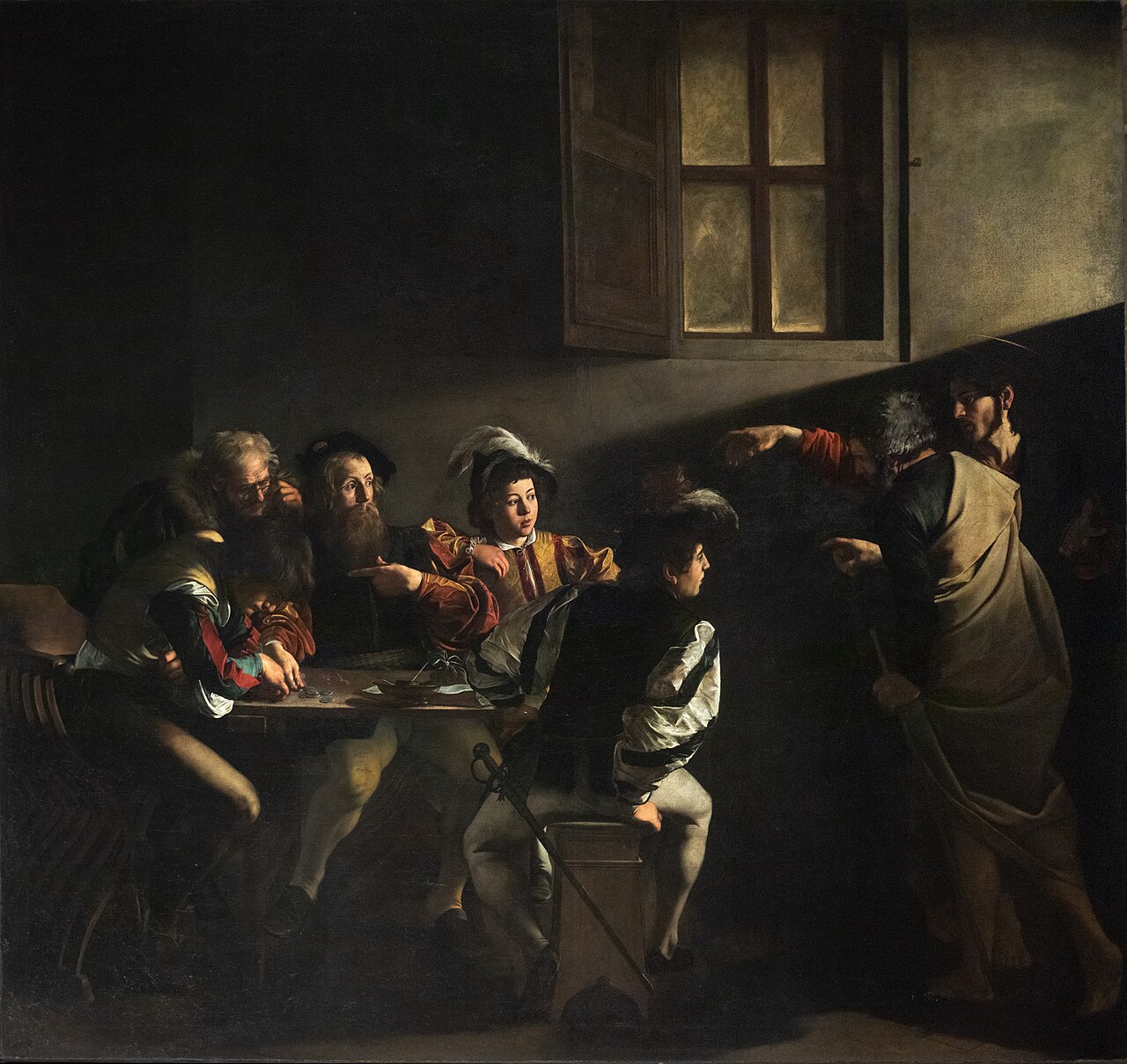
The Calling of Saint Matthew, Caravaggio, c. 1600. Public domain (CC0), via Wikipedia.
What it means for the work
Each collection Tina Fletcher makes uses Active Void as its foundation. The subjects change. Australian nocturnal animals in Nightlife, ocean creatures and mythology in Below, marionettes and emotional geometry in the collection after that. The technique stays the same.
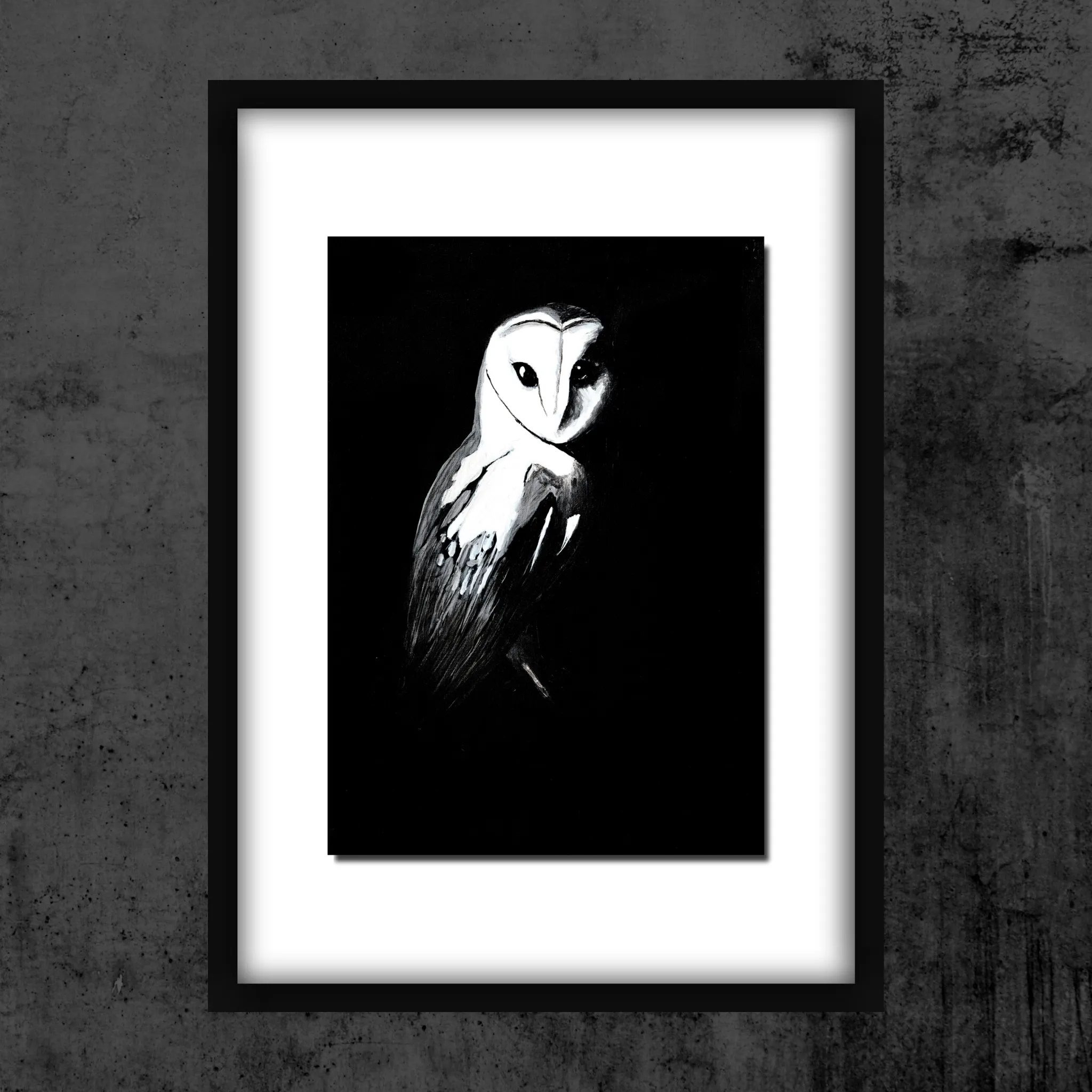
The dark is always laid down first.
The story surfaces.
What doesn’t make it stays in the void.
See it in the work
- Nightlife Collection: Australia’s night animals, briefly lit
- What is Active Void painting?: the full technique article
- Tina Fletcher: the artist behind the technique
- Meet Enya: the AI partner who helps collectors go deeper into the work