
How Long Does a Painting Take? Until I Decide It’s Finished.
Some paintings come together quickly. Others take their time. Knowing when to stop is a whole other art.
People sometimes ask how long it takes me to finish a painting.
It’s a perfectly reasonable question. Unfortunately, I don’t have a particularly tidy answer.
Some paintings are quick. Some take much longer. I don’t time each one, and I don’t sit down thinking, right, this one gets forty-five minutes and then it’s out the door.
I work until the painting is finished.
Which sounds wonderfully straightforward until you get to the rather inconvenient question: how do you know when that is?
A painting doesn’t come with a timer
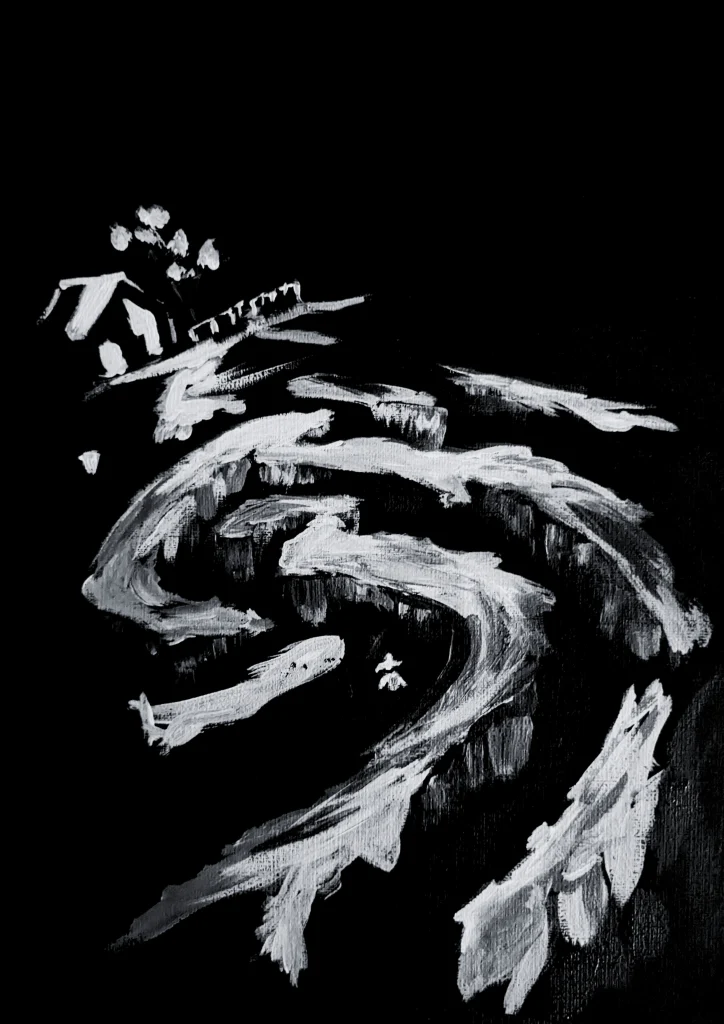
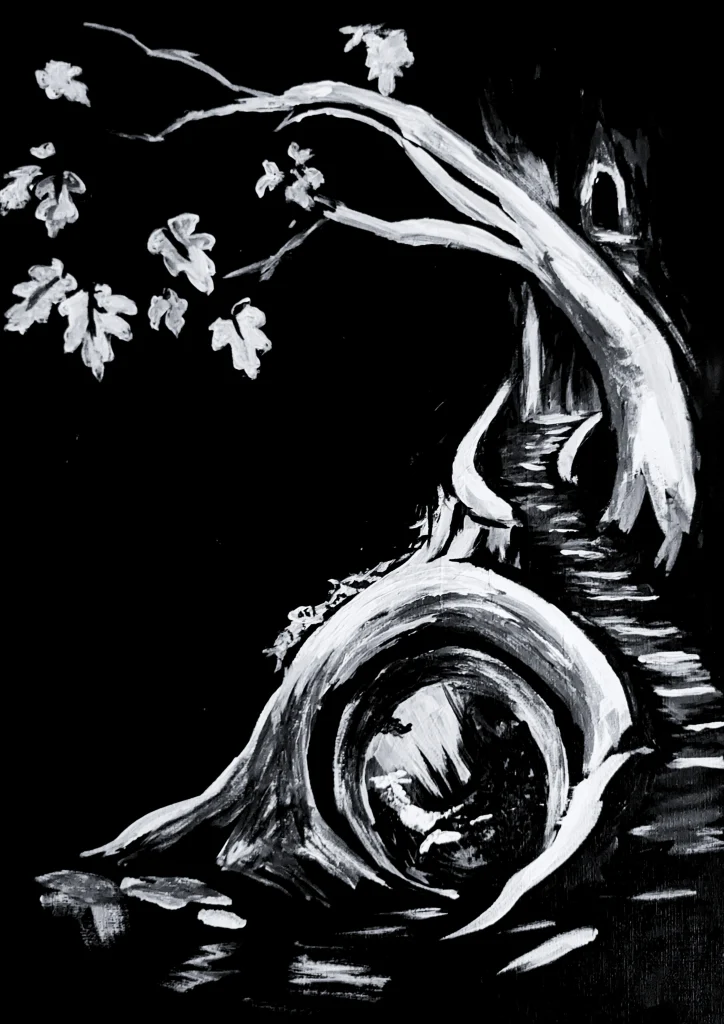
I paint in acrylic, usually on a black surface, and I work across different subjects and styles. Sometimes the idea arrives with a clear shape and the marks seem to know exactly where they want to go. Other times, the painting has quite different ideas from mine.
A subject might begin as one thing and gradually turn into something else. I may change where the light falls, lose part of a figure into the black, or realise that a section I thought was essential is actually getting in the way.
That doesn’t happen on a schedule.
A painting with just a handful of marks might take very little time once I know what those marks should be. Or I might spend ages deciding which marks deserve to stay.
Meanwhile, something with more detail can sometimes move along surprisingly easily because the decisions feel obvious.
That’s why I don’t find a time estimate particularly useful. The number of hours doesn’t tell you how difficult the decisions were, how much changed along the way, or whether the finished painting has any life in it.
Simple isn’t always easy
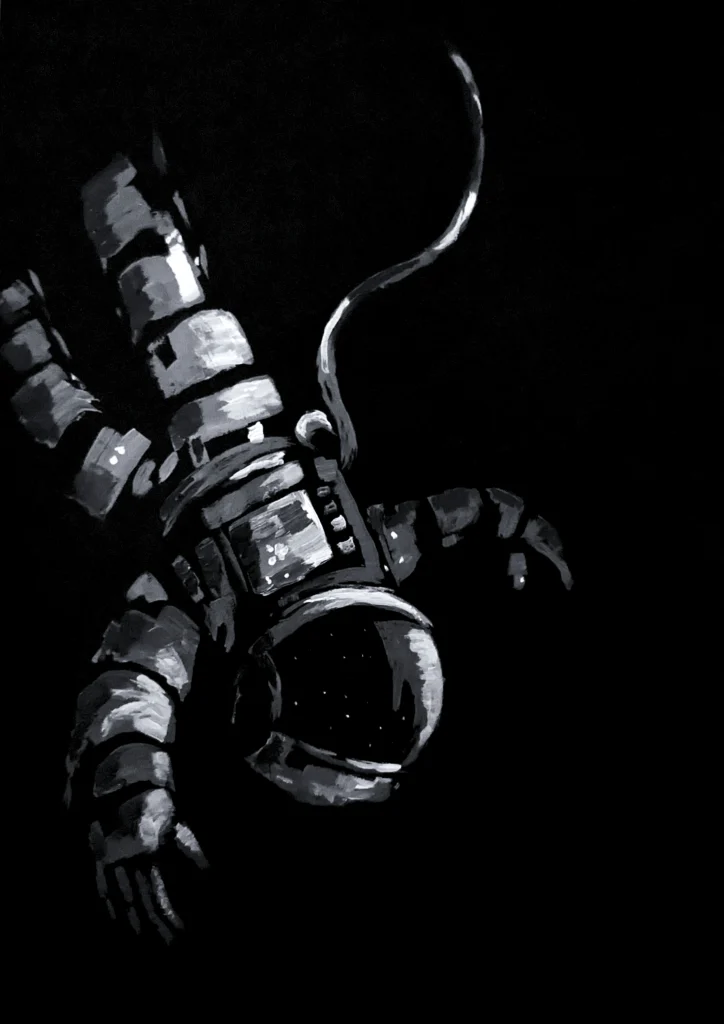
I like expressive work. Sometimes I want rough, chunky shapes. Sometimes I want a subject to emerge from the darkness with just enough information for you to recognise it.
The temptation is to keep adding. Another highlight here. A little more shape there. Perhaps that shadow needs explaining.
But a painting doesn’t necessarily improve every time you touch it.
I’ve seen my own work become less interesting as I’ve tried to make it more complete. The energy that was there in the earlier version can disappear under a collection of perfectly reasonable little corrections.
And those corrections are seductive. Each one seems harmless. Together, they can change the entire character of the painting.
A few strong brushstrokes can be more convincing than a hundred careful ones. Not because the hundred are bad, but because the painting may not need them.
Knowing what to leave out takes judgement. Sometimes it takes more judgement than knowing what to put in.
The next-day test
Finishing a painting in one sitting doesn’t always mean I never look at it critically again.
I might come back the next day and see something I missed. Perhaps the balance feels wrong, or the light is pulling my eye to the wrong place. Maybe a shape that made sense yesterday looks rather odd today.
That’s when I give it a second review.
If I’m stuck, I might even give it a third.
A little distance helps. When you’ve been staring at the same painting for a while, your eye starts accepting things simply because they’ve been there for the past hour. Coming back later can make the awkward bits surprisingly obvious.
But here’s the important part: I can’t keep reviewing it forever.
Eventually I have to decide it’s done.
Because if I don’t make that decision, the painting will never be good enough. There will always be another possible improvement, another mark to reconsider, another tiny problem I could spend an afternoon solving.
That isn’t finishing a painting. That’s entering into a lifelong negotiation with a piece of canvas.
When another brushstroke makes things worse
I don’t think every painting needs to be rescued.
Sometimes I’ve taken a painting too far and had to work backwards. I might paint over part of it to keep the section that still has some energy. Other times I return the whole surface to black and begin again.
That might sound dramatic, but the black surface is familiar territory to me. Starting again isn’t the end of the world.
I’m interested in what happens while I’m painting, not just in protecting the first idea I had. If the painting needs to change, it can change.
There’s a difference, though, between making a bold decision because something genuinely isn’t working and endlessly tinkering because I can’t bear to call it finished.
One can move the painting forward. The other can keep it trapped in the studio.
Learning to recognise that difference is part of painting.
Finished doesn’t mean perfect
I don’t believe a painting has to be technically perfect to be good.
A slightly awkward line might give a figure more personality. An unfinished-looking edge might be exactly what lets the subject disappear into the darkness. A rough mark can say something that a smooth, careful one can’t.
If I tried to correct every oddity, I’d probably remove much of what I like about my own work.
And even if I did manage to make every part technically flawless, would that make it more interesting? Not necessarily.
I want a painting to have presence. I want it to catch your eye and make you curious enough to look again. I don’t need every square centimetre to demonstrate how neatly I can apply paint.
There comes a point when I have to ask whether the painting is actually missing something, or whether I’m simply having trouble letting it go.
Those are two very different problems.
What does the time have to do with the price?
There’s another reason the question of time interests me. People sometimes connect the number of hours spent on an artwork with what it should cost.
I understand the instinct. We’re used to paying for people’s time. If one job takes an hour and another takes ten, it seems logical that the second should cost more.
But art isn’t quite like getting someone to repair a fence.
A painting isn’t simply a pile of hours made visible.
The result matters. The choices matter. The way the work holds together, the character it has, the way it makes somebody stop and look: those things don’t arrive in neat hourly increments.
A painting that comes together quickly isn’t somehow worth less as a piece of art because I didn’t have to fight with it. And a painting that takes me ages isn’t automatically more successful because I worked hard.
Sometimes the quickest paintings have the strongest energy. Sometimes the longer ones become something I couldn’t have imagined when I began.
Neither is a better story just because of the time involved.
Of course, the practical side of being an artist matters. Materials cost money, and my time has value. Those are real considerations when running an art business.
But I don’t want to ask a collector to judge a painting by a stopwatch. I’d much rather they looked at the work itself.
The decision to stop
I think finishing a painting involves two different decisions.
The first is an artistic one: does it say what I want it to say? Does the light work? Does the subject have enough presence? Is there something alive in the marks?
The second is more personal: am I willing to let it be what it is?
That second question is harder than it sounds.
There’s almost always another version I could imagine. I could make a face clearer, darken a corner, shift a highlight or change the shape of a hand. I could make the painting tidier, stranger, softer or more dramatic.
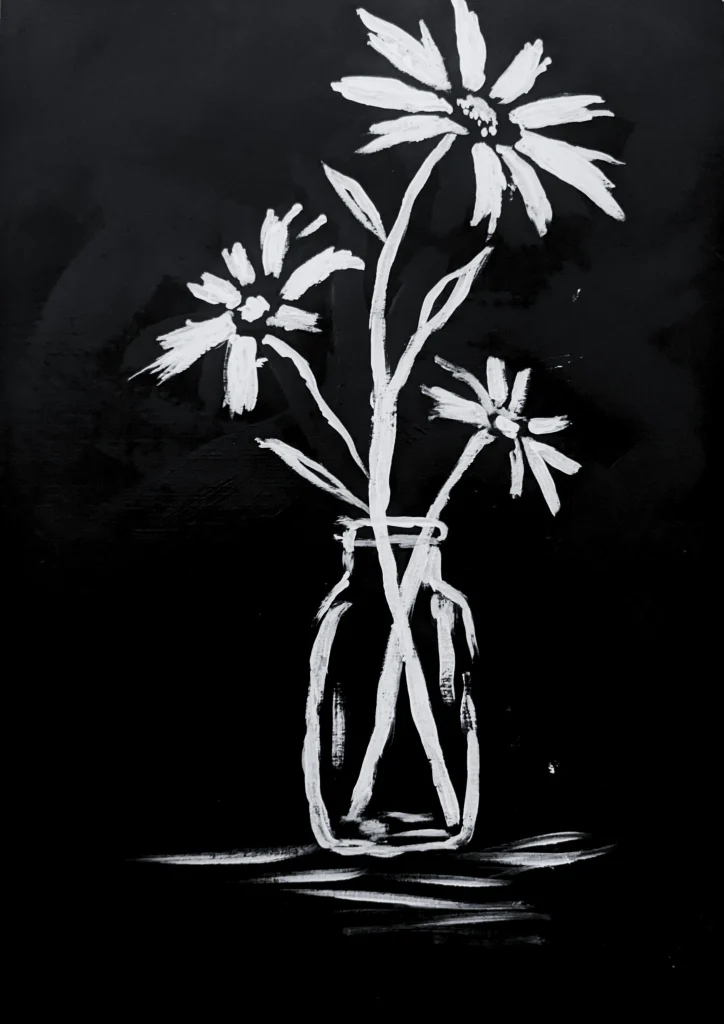
But each choice would create a different painting, not necessarily a better one.
After a second look, and occasionally a third, I need to decide whether the work is finished enough to leave the studio.
Not because I’ve run out of ideas. Not because the clock says so. Because I think the painting has reached the point where more interference might take away as much as it adds.
And if there’s one thing I’ve learned from working on a black surface, it’s that sometimes leaving something alone is the strongest mark you can make.
So how long does it take?
I still can’t give you a standard number of minutes or hours.
One painting might feel complete almost as soon as it begins. Another might need a longer session, a night’s distance and a fresh look. Occasionally, the best thing I can do is cover it in black and start again.
I don’t keep score.
What matters to me is the finished painting: whether it has its own character, whether the light and darkness are doing something interesting, and whether I can finally put the brush down without immediately reaching for it again.
And yes, I may still spot something I’d change a week later.
That’s all right. I made the decision.
The painting gets to be finished.